In a nutshell
- Rummu Quarry is open every day from 10:00 to 20:00, all year round.[1] The seasons change what you see rather than whether you can go.
- Summer water temperature at Rummu Quarry is 15.0-20.0 °C.[2] Swimming here is unofficial and unguarded, and locals usually come in summer.[3]
- A skating rink ticket at Rummu costs €10 per person or €20 per family and includes winter access to the quarry, the rink, the prison and an audio guide.[4]
- Rummu Quarry is 45 km from Tallinn with an estimated transfer time of 50 min, and FlixBus runs 2 rides each day between Tallinn and Rummu.[5][6]
- The six-hour Rummu, Coastal Cliffs and Keila Waterfall tour from Tallinn is rated 4.76 from 133 reviews and takes a small group limited to 7 participants.[7]
- Top choice Rummu, cliffs and waterfall from US$144 Duration6 hours[7]Group sizeLimited to 7 participants[7]Rating4.76 from 133 reviews[7]StopsSuurupi, Keila, Paldiski, Pakri, Rummu[7] Check availability
- Pakri park and coast from US$167 Duration5 hours[8]Group sizePrivate group[8]Rating4.69 from 8 reviews[8]StopsPaldiski, café, Keila Waterfall[8] See this tour
- Paldiski sights and Rummu from US$127 Duration7 hours[9]Group sizeLimited to 8 participants[9]Rating4.15 from 6 reviews[9]StopsKeila, Paldiski, Pakri Cliff, Rummu[9] See this tour
Opening times Open all year round Mon-Sun 10:00 - 20:00
Is the coast worth a day in every season?
Know before you leave
Keila waterfall weather and the spring melt
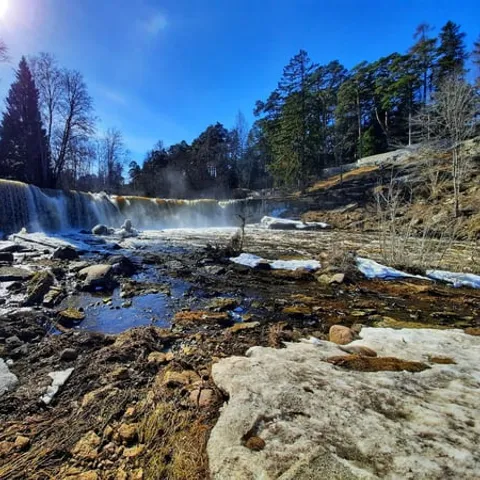
Spring comes slowly to northern Estonia, and the weeks after the thaw change the landscape faster than any other time of year. Meltwater and rain run off the fields and forests into the Keila River, and the river carries all of it over a ledge that stands 6 metres high.[10] You hear the fall before you see it, and the air around the viewing area is noticeably colder than the car park. In this season the waterfall is the headline and the quarry lake is a cold, quiet backdrop.
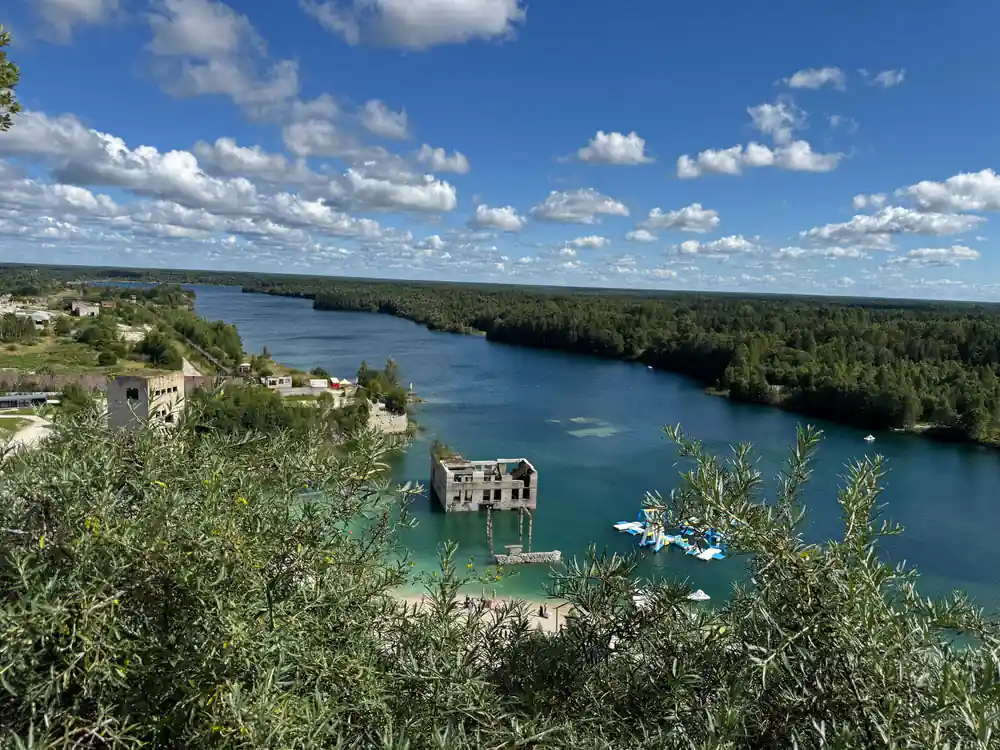
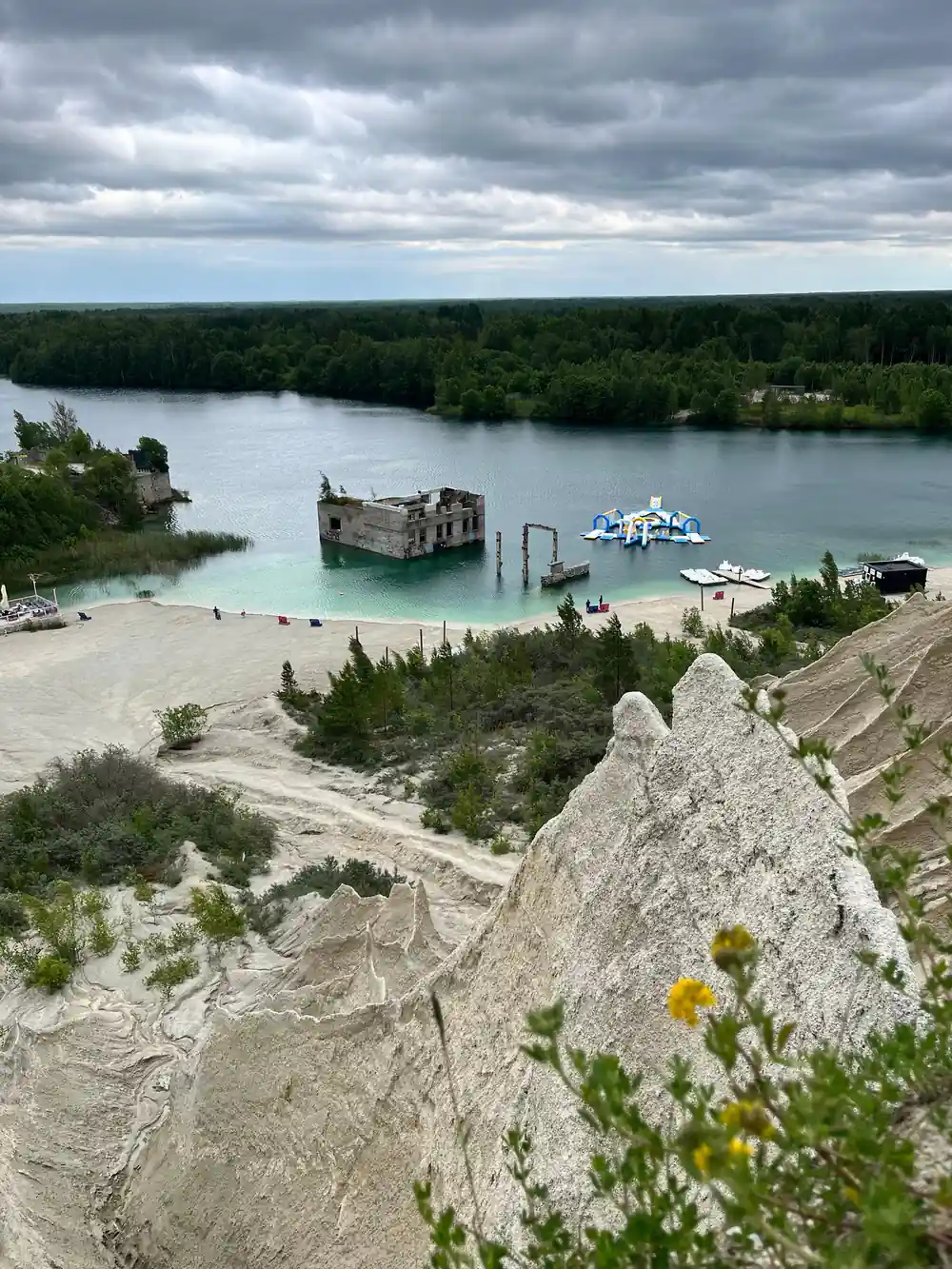
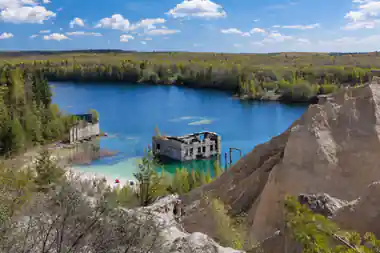
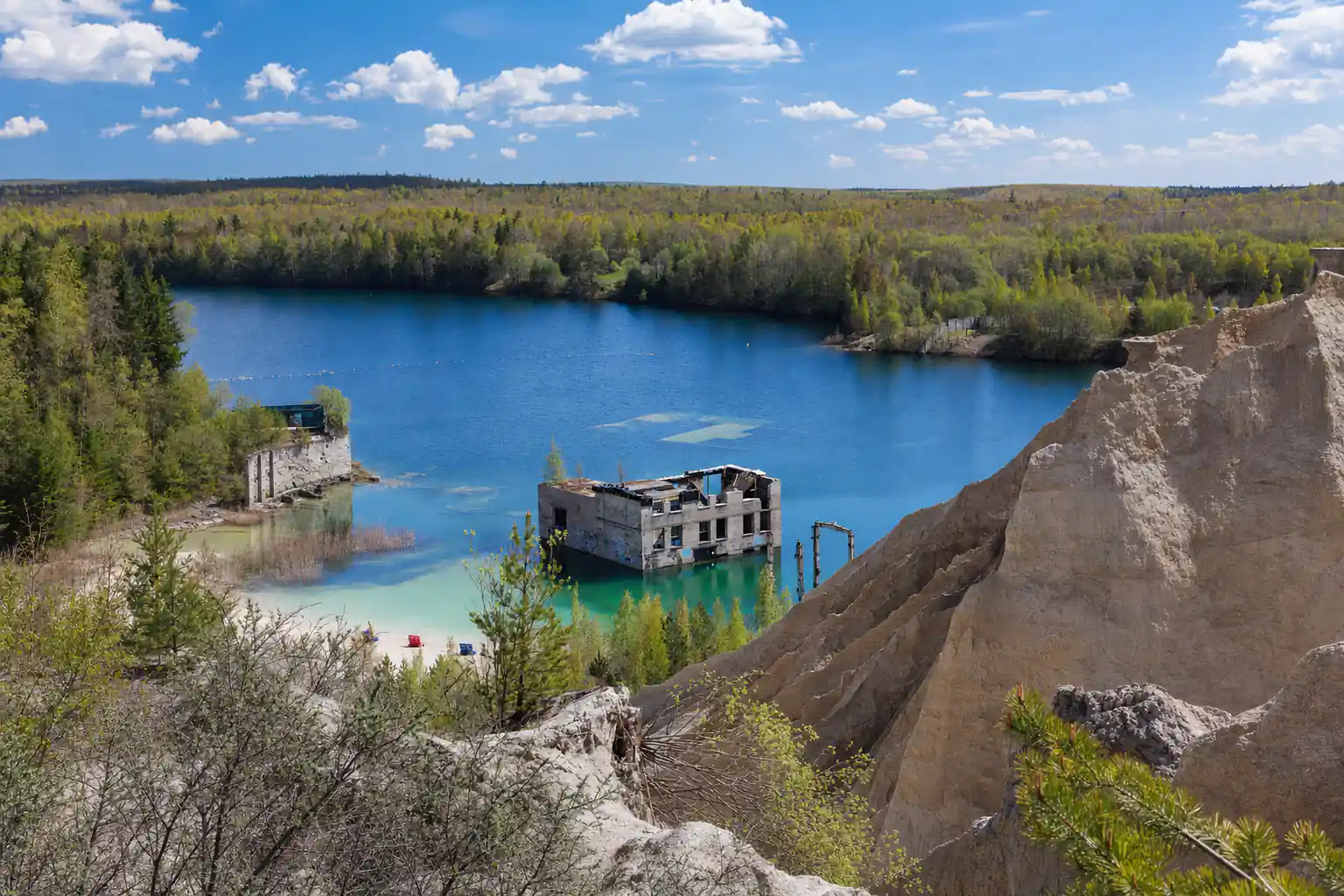
The quarry is a flooded limestone pit. When the prison beside it closed after 1991, the pumps that had kept the workings dry were shut down, and water filled the basin.[11] The lake is 14 metres deep at its deepest point.[12] In spring that water still holds the winter's chill. Swimming and diving are for people with proper cold-water kit, and the paths around the shore can be soft underfoot.
Spring is also the season of mud and sudden warm afternoons. The drive out from Tallinn passes farmland and pine forest, and a short walk on the riverbank fits neatly around a visit to the fall. Stout shoes, a warm mid-layer and a jacket that keeps out drizzle cover almost any spring day.
Summer at Rummu Quarry: swimming, diving and warm water
Summer is the season most people picture, and the water is at its most inviting. The summer water temperature at Rummu Quarry is 15.0-20.0 °C.[2] That is warm enough for a long swim on a still afternoon and cool enough to feel refreshing. The quarry is an unofficial and unguarded place for swimming or diving, and locals usually come here to swim in summer.[3] Treat it as open water: make your own judgement, keep an eye on the people you came with, and skip the swim if you are not confident.
Diving has its own rhythm here. Rummu Diving & WaterSports organises weekly dives for certified divers, open water dives for people whose courses are incomplete, and full OWD courses.[13] The lake reaches 14 metres at its deepest point[12], and the flooded buildings along the shore are the view everybody photographs.
Summer days are long, which makes late afternoon the nicest window: warm light, calmer water and more room on the shore. Rummu Quarry is open every day from 10:00 to 20:00, all year round.[1]
The flooded quarry below the old prison blocks, with the Pakri cliffs further along the same coast.
Autumn wind on the Pakri coastal cliffs
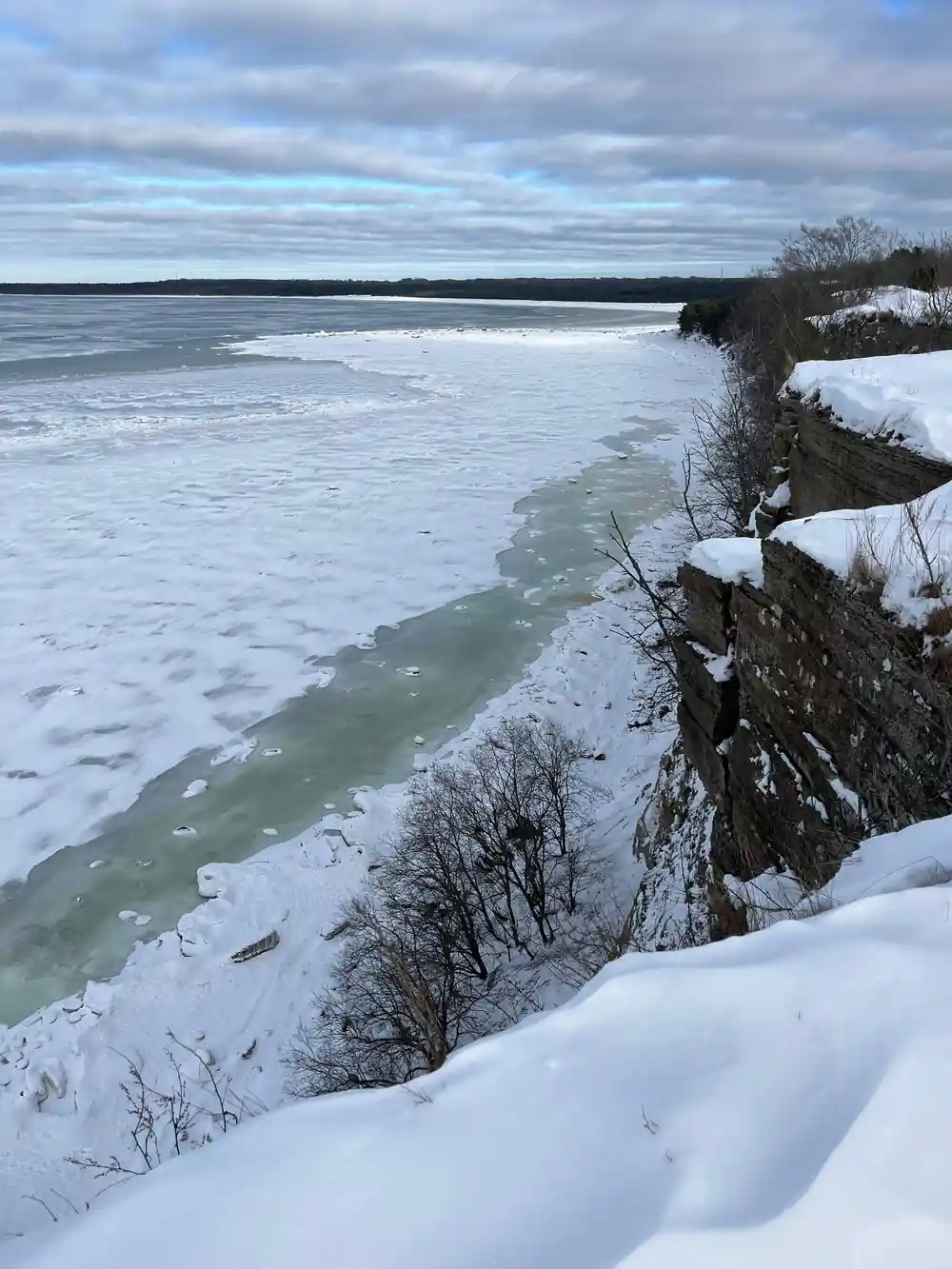
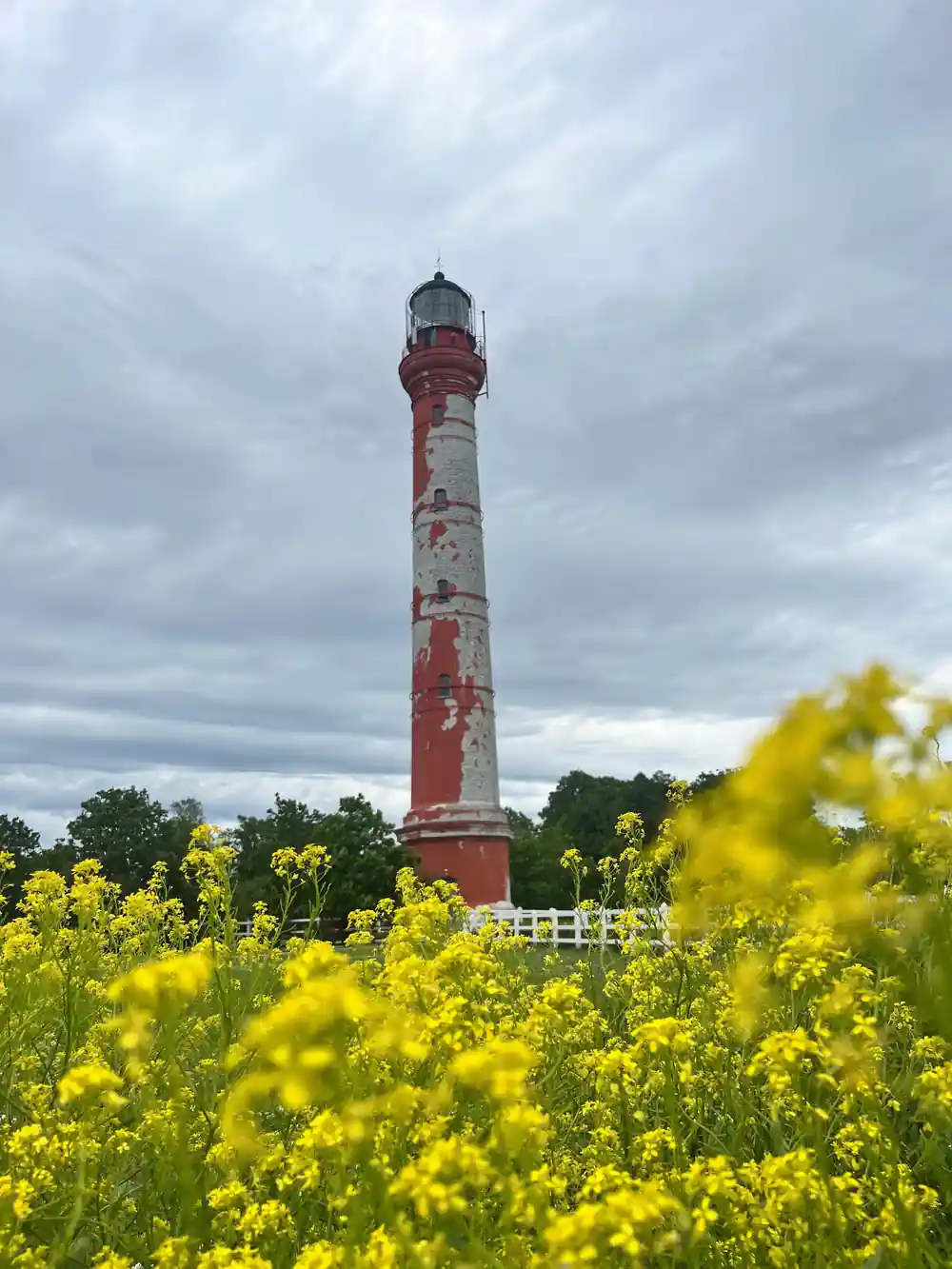
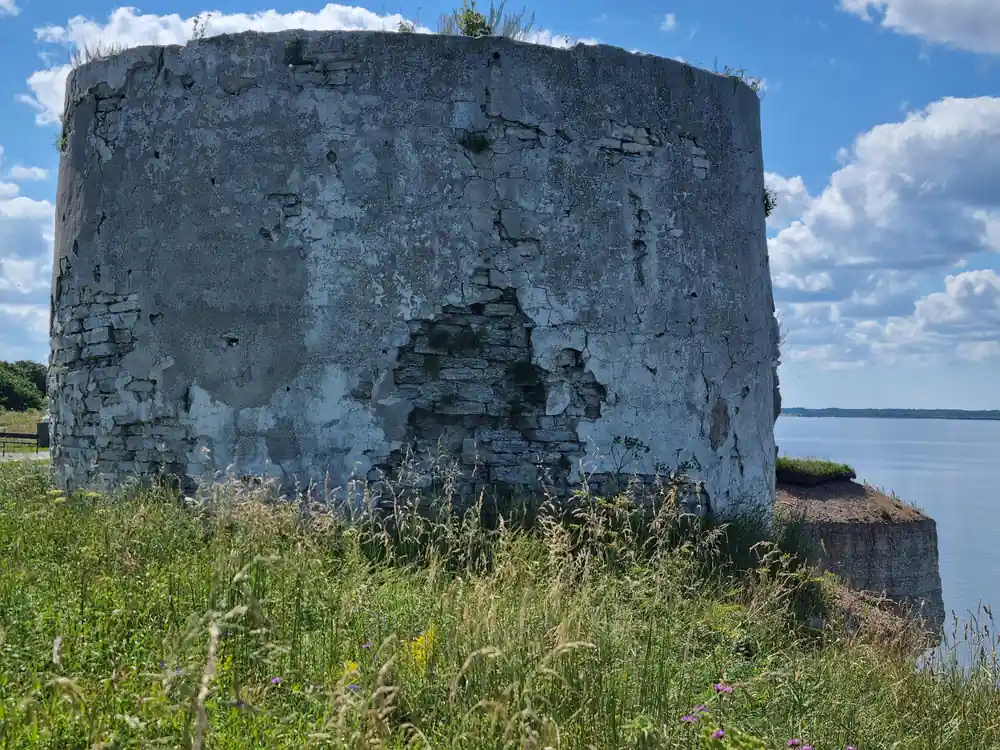
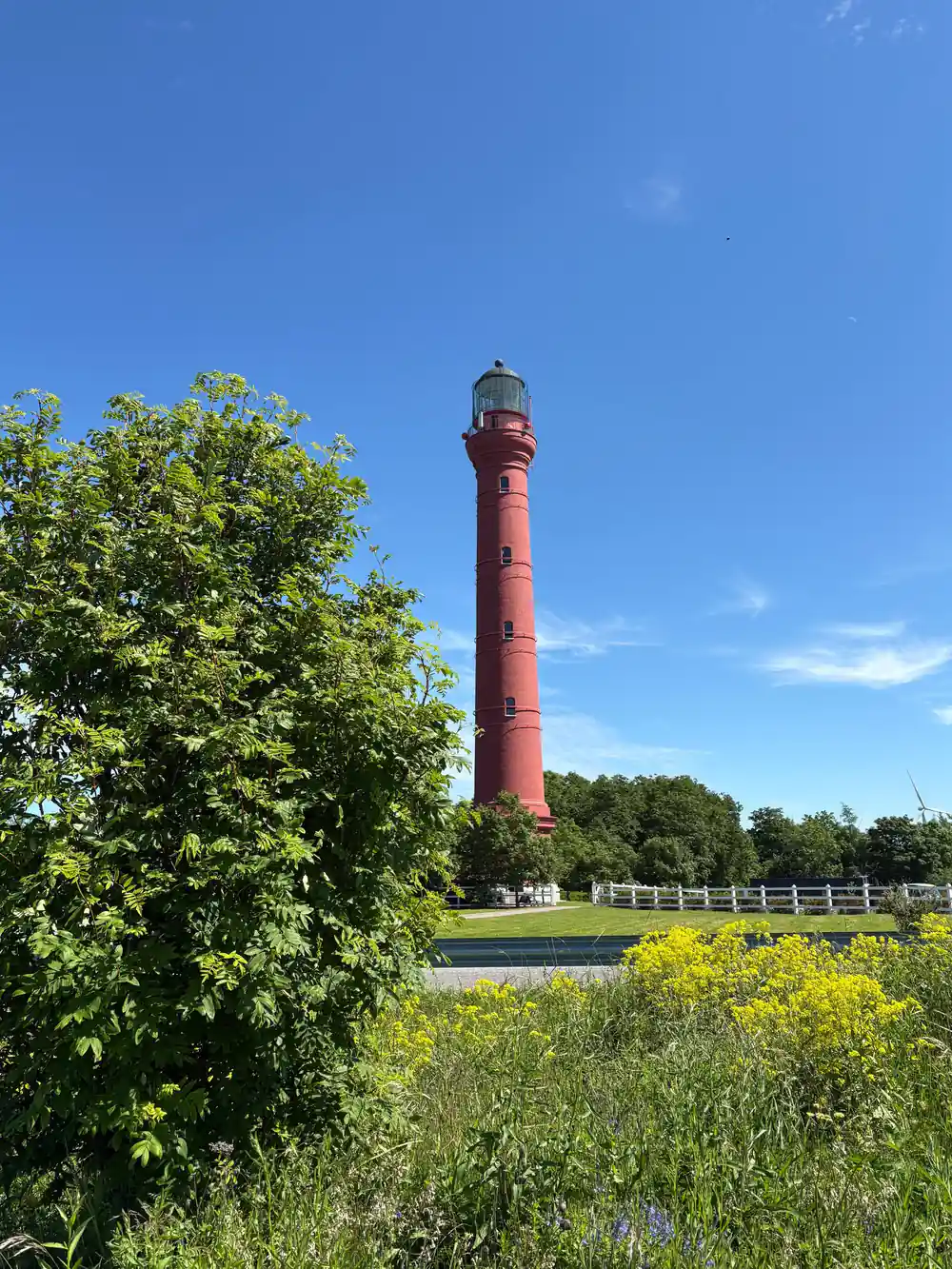
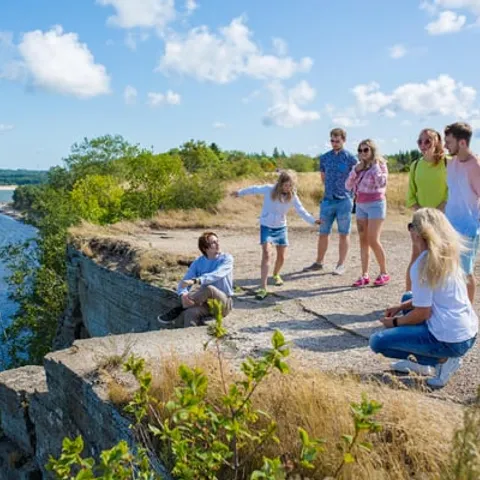
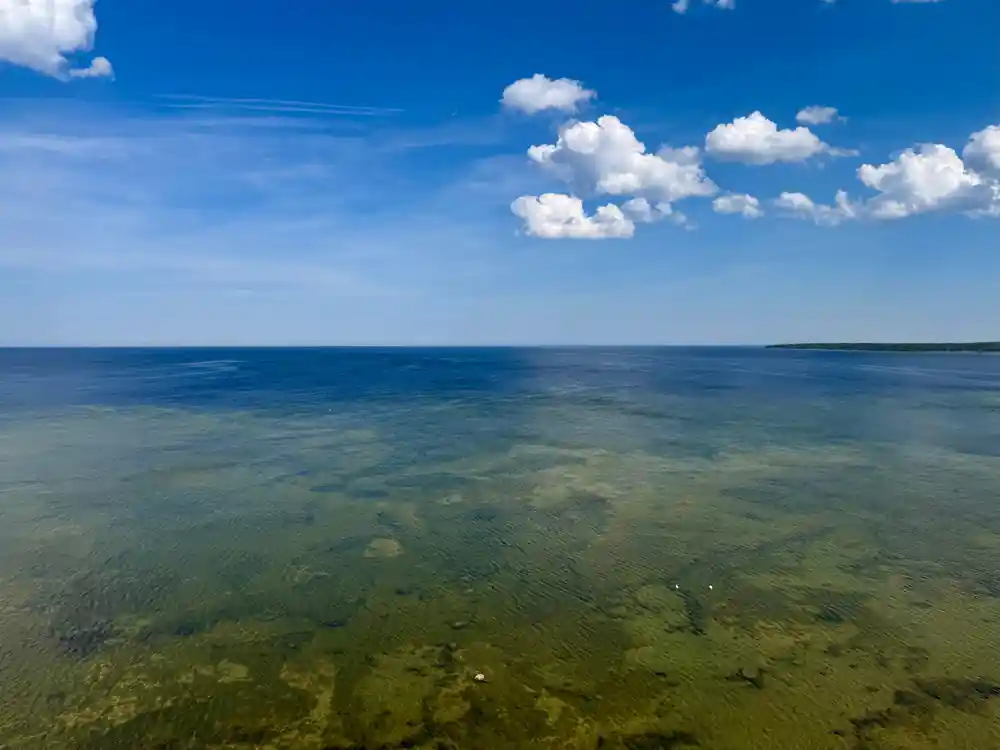
Autumn is when the coast shows its teeth. The Pakri cliffs stand above the Baltic at the western end of the road out of Tallinn, layers of limestone and sandstone dropping towards grey water, and the wind off the sea is steady and cold. Waves break white at the base of the cliff, gulls hang in the updraught, and the horizon can be sharp one minute and gone the next. The six-hour day tour from Tallinn stops at Suurupi, Keila Waterfall, Paldiski, the Pakri Lighthouse and Rummu Quarry.[7] The cliff section sits between Paldiski and the quarry, close to the end of the day.
The stone underfoot gives the coast its character. One variety of Estonian limestone, a detritic limestone with a marble-like structure and texture, is known as Vasalemma marble, and it is easy to work.[14] On the cliff faces and the old quarry walls it shows as pale, layered rock that catches low autumn light beautifully.
Pack for wind rather than rain. A shell jacket, a hat that will not blow away and shoes with grip on wet rock are worth more than an umbrella. Wind makes the air feel colder than the thermometer suggests, and an exposed cliff edge is no place for a loose scarf.
Winter ice, short days and the Rummu skating rink
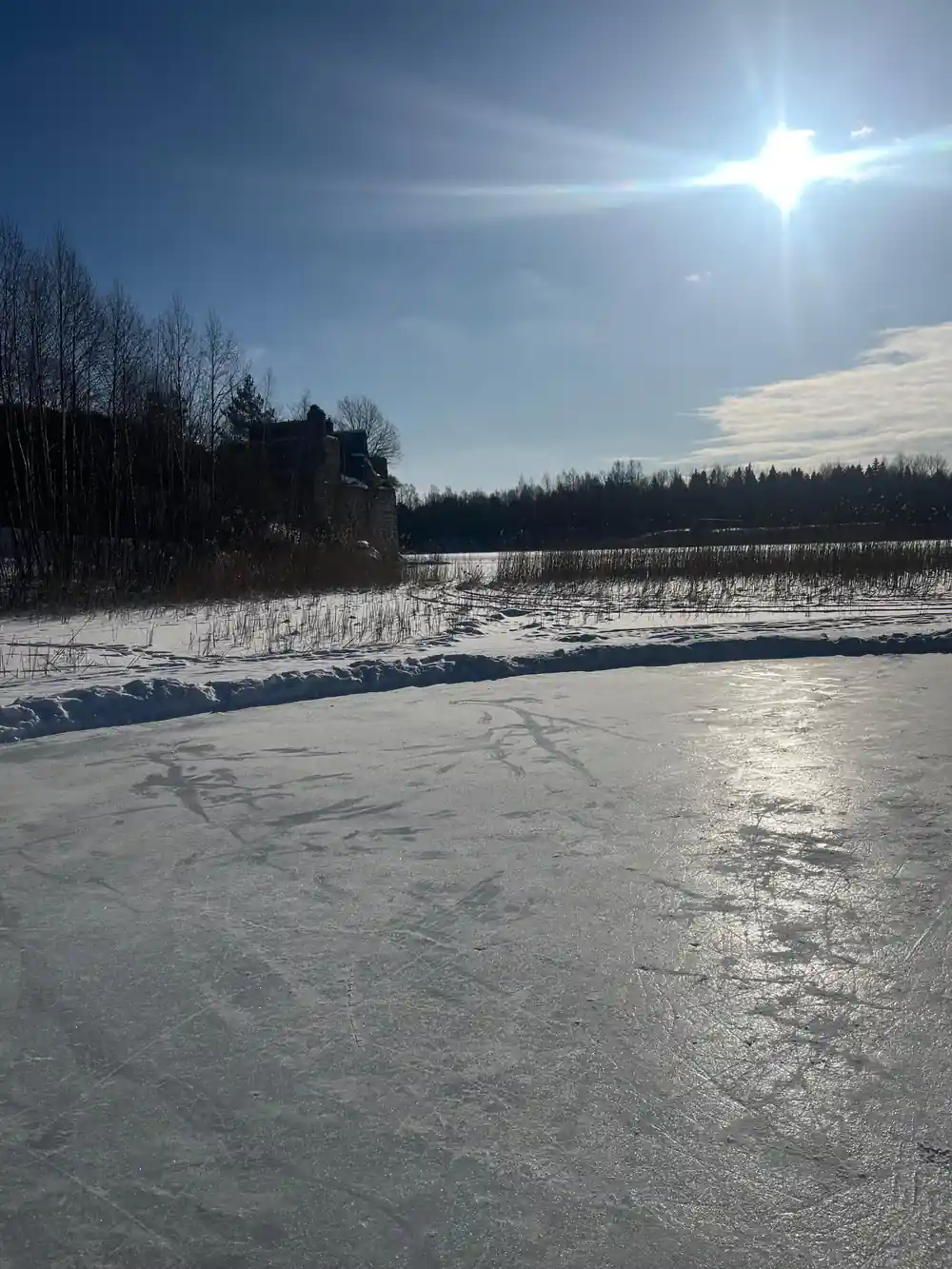
Winter turns the quarry into something quite different. A ticket to the Rummu skating rink costs €10 per person or €20 per family and includes winter access to the quarry, the rink, the prison and an audio guide.[4] The abandoned prison buildings are the backdrop, and the lake sits still behind the rink.
Daylight is the real constraint in winter. Rummu Quarry is open every day from 10:00 to 20:00, all year round[1], but northern light fades early. Plan a short day and start in the morning. Sauna rituals are offered at Paekalda Holiday Center[15], a fine way to finish a cold afternoon outside.
Layer up properly if you come in deep winter. Thermal base layers, wool socks, gloves and a windproof outer shell make the difference between a brisk hour outdoors and a miserable one, and a flask of something hot earns its place in your bag. The light stays low and blue for much of the day, which gives the quarry an almost monochrome look in photographs.
from US$144
The six-hour day tour takes a small group limited to 7 participants, with a live tour guide in English.[7]
What rain and snow mean for the six-hour tour
Weather on this coast is changeable rather than dramatic, and a grey wet day still has plenty to look at: mist over the quarry lake, water running down the cliffs, and the waterfall carrying more water than usual. The Tallinn: Rummu Quarry, Coastal Cliffs and Keila Waterfall tour takes 6 hours, runs as a small group limited to 7 participants, and has a live tour guide in English.[7]
Booking terms are kind to uncertain weather. You can reserve now and pay later, and cancellation is free up to 24 hours in advance for a full refund.[7] That is the window to watch: check the forecast the day before, and make your decision then.
In practice, rain gear decides how much you enjoy the day. A waterproof jacket with a hood, a dry bag for your phone and footwear with tread beat an umbrella on a windy coast. The van ride between stops is a good chance to dry off and watch the landscape change from forest to coast. If there is snow on the roads, allow extra time for the drive and check your booking details before you set out.
Tallinn when to go: the coast has its own seasons
Tallinn when to go is usually a question about the city, but the coast keeps its own calendar and the two do not always match. Rummu Quarry is 45 km from Tallinn by road, with an estimated transfer time of 50 min.[5] That puts the quarry comfortably inside a day trip, so you can follow the coast's weather without moving hotels.
If you would rather not drive, FlixBus runs 2 rides each day between Tallinn and Rummu.[6] For a longer stay, Rummu Caravan Park, located in Rummu Quarry, offers overnight accommodation for motorhomes, caravans and tents.[16] Waking up beside the lake is a different experience from arriving on a day trip.
Each season gives a different version of the coast. Late spring and early autumn bring long, cool days; high summer brings the warmest water and the longest evenings; deep winter brings the skating rink and pale northern light. The guided day tour takes 6 hours and has a live tour guide in English.[7] Decide what you want from the day, then pick the season to match.
Planning your visit around seasonal conditions
A few habits make a seasonal trip to Rummu and the Pakri coast much easier. Rummu Quarry opens every day from 10:00 to 20:00, all year round[1], and the day tour runs as a small group limited to 7 participants.[7] If your dates are fixed, book before you travel; if they are not, keep the free cancellation window in mind.
Let the season drive your packing list. Waterproof outer layers, warm mid-layers and shoes with grip cover almost every month. In summer add swimwear, a towel and sun cream for the exposed cliff tops. In winter add thermals, gloves and a hat. Cameras and phones do better in a dry bag on the coast, where spray carries further than you expect.
Build the day around the light. Start early when the days are short and start late when they are long, so the cliffs and the waterfall are at their kindest. The quarry, the cliffs and the waterfall sit close enough together to fit into one unhurried day, whether you drive, take the bus or join a guided van tour.
How long the Rummu and Keila day tours last
Durations as listed on the GetYourGuide pages for these tours:[17],[8],[7],[9].
From-prices for tours that reach Rummu or the coast
US dollar from-prices as listed on GetYourGuide for these listings:[7],[9],[8],[17]. No child prices are listed for these tours.
When to go, season by season
Plan around the season
Pick your dates
Decide what you want from the coast: a swim, a waterfall in spate, wind on the cliffs or ice under skates. The season decides which of those you get.
Book the day tour
The six-hour guided day covers the waterfall, the cliffs and the quarry in one run, with a live tour guide in English.[7]
Pack for the month
Waterproof shell, warm mid-layer and grippy shoes in every season, plus swimwear in summer and thermals in winter.
Watch the daylight
Winter days are short, so start early and keep the plan tight. Summer evenings run long, which leaves room for a late stop.
Check before you set out
Roads and forecasts change quickly on this coast. Confirm your start time and meeting point the day before you travel.
See the quarry, the cliffs and the waterfall in one day
from US$144Reserve now & pay later