In a nutshell
- The tour stops at Suurupi, Keila Waterfall, Paldiski, Pakri Lighthouse and Rummu Quarry, with the van in between each stop.[1]
- Midday flattens the white spoil slopes. Early morning and the long Baltic evening give the turquoise water depth and cleaner reflections.
- A polariser, a neutral density filter for the waterfall, microfibre cloths for limestone dust, and a rain cover for sea spray.
- Rummu and Pakri day tours start from US$127, and the tour booked from this site starts from US$144.[1][2]
- Rummu Quarry and Prison to Tallinn is listed as 45 km and about 50 min by road, and FlixBus runs 2 rides each day.[3][4]
- Top choice Rummu Quarry & Keila Falls from US$144 Duration6 hours[1]Group sizeLimited to 7 participants[1]Rating4.76 from 133 reviews[1]Guide languageEnglish[1] Check availability
- Paldiski Sights & Rummu from US$127 Duration7 hours[2]Group sizeLimited to 8 participants[2]Rating4.15 from 6 reviews[2]Guide languageEnglish[2] See this tour
- Pakri Park & Keila Falls from US$167 Duration5 hours[5]Group sizePrivate group[5]Rating4.69 from 8 reviews[5]Guide languageEnglish, Estonian[5] See this tour
Max Lake Depth: 14 m (but you’re usually diving at around 5 -7 m)
Is this Rummu, Pakri and Keila day trip worth it for photographers?
Know before you leave
Rummu Quarry: Timing the Submerged Light
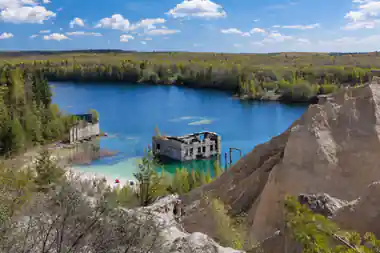
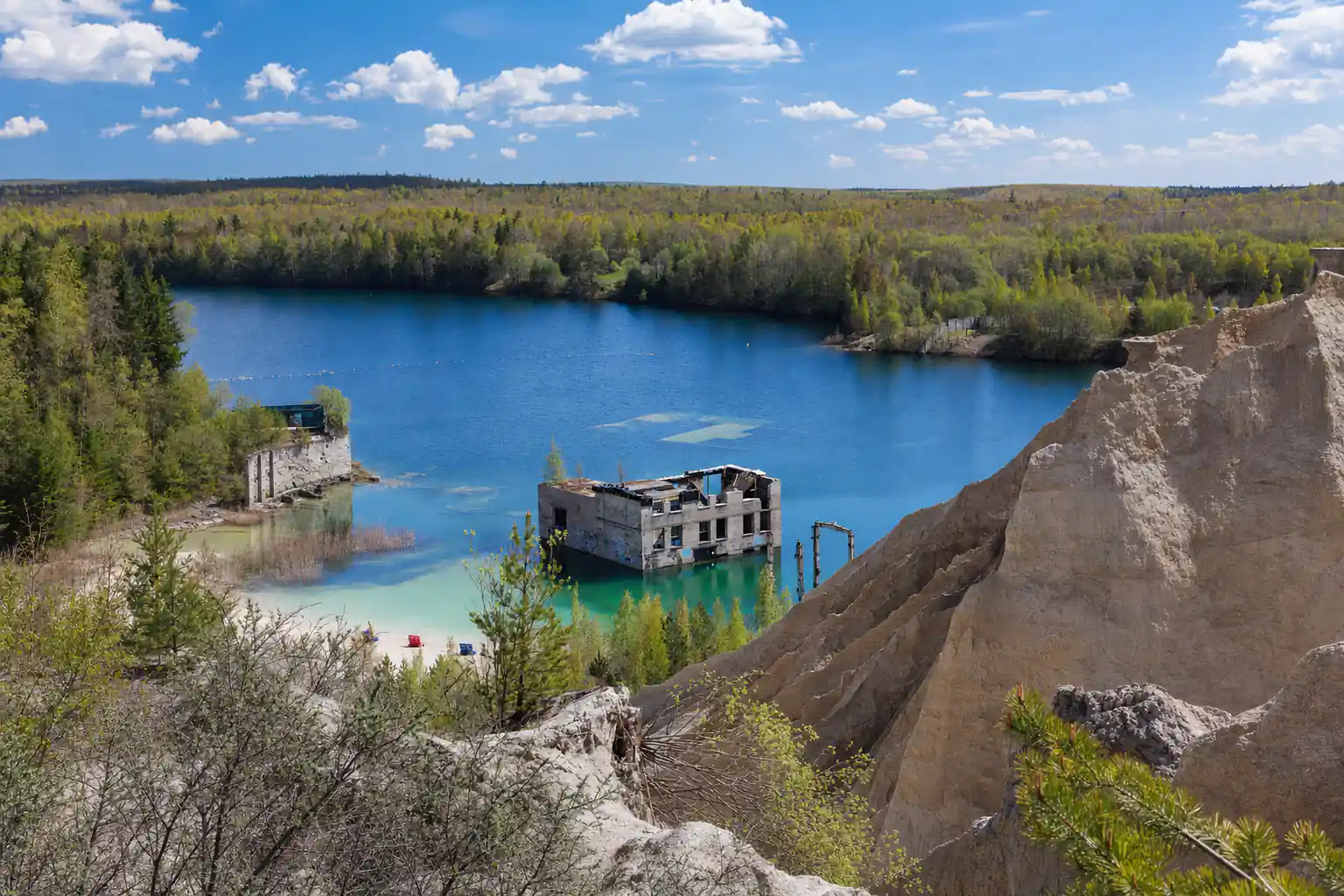
Rummu quarry is a flooded limestone pit where the water glows a milky turquoise and the abandoned prison buildings stand half-drowned in the lake. The quarry began to fill with water after the nearby prison closed after 1991, when pumps that kept the quarry and the prison dry were shut down.[10] The lake reaches a maximum depth of 14 metres.[11] On a still morning the walls and windows reflect cleanly on the surface, and that reflection is the frame most photographers come for.
Light decides everything here. The pale spoil slopes bounce plenty of light back at the camera, so the water looks brightest in the middle of the day and richest early and late. On the day trip booked from this site, Rummu Quarry is the final stop, after Suurupi, Keila Waterfall, Paldiski and Pakri Lighthouse.[1] A polariser lets you dial down the sheen and show the drowned walls below the surface, and a spare cloth matters, because limestone dust settles on everything.
Summer is the busiest season. Locals usually come to swim in the lake in summer[6] and the water temperature sits at 15.0-20.0 °C.[7] Shoot early or late if you want the buildings without swimmers in the frame, and keep your tripod back from the rim, because the quarry walls drop away quickly.
Lens Selection for the White Spoil Mountain
The quarry is cut into limestone, and the local stone is a detritic limestone with a marble-like structure and texture that people around here call Vasalemma marble.[12] In photographs that reads as pale, softly banded walls sitting somewhere between chalk and stone, with white terraces stacked above the turquoise water like a small amphitheatre.
Lens choice is simple. A wide zoom covers the flooded buildings and the whole bowl of the quarry in one frame, which is what the viewpoints around the rim are made for. A short telephoto earns its place when you want to isolate a single window frame or a run of white terrace against the water. Metering on white stone makes the lake look darker than your eye sees it, so trust the histogram rather than the screen and keep some colour in the water.
Turquoise water inside the old quarry, with the prison buildings still standing in the lake.
Keila Waterfall: Exposure and Filtration Strategy
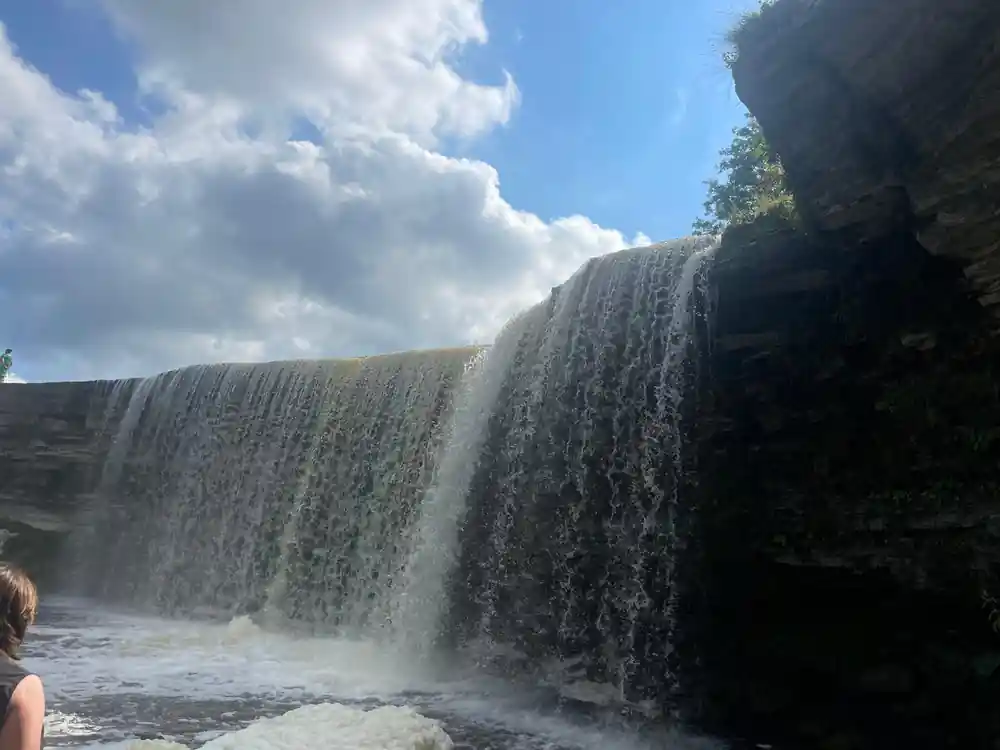
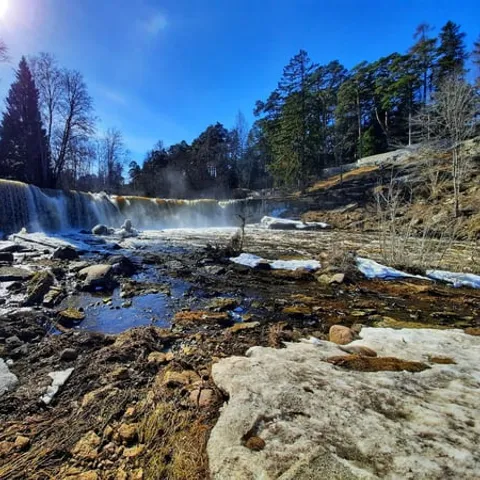
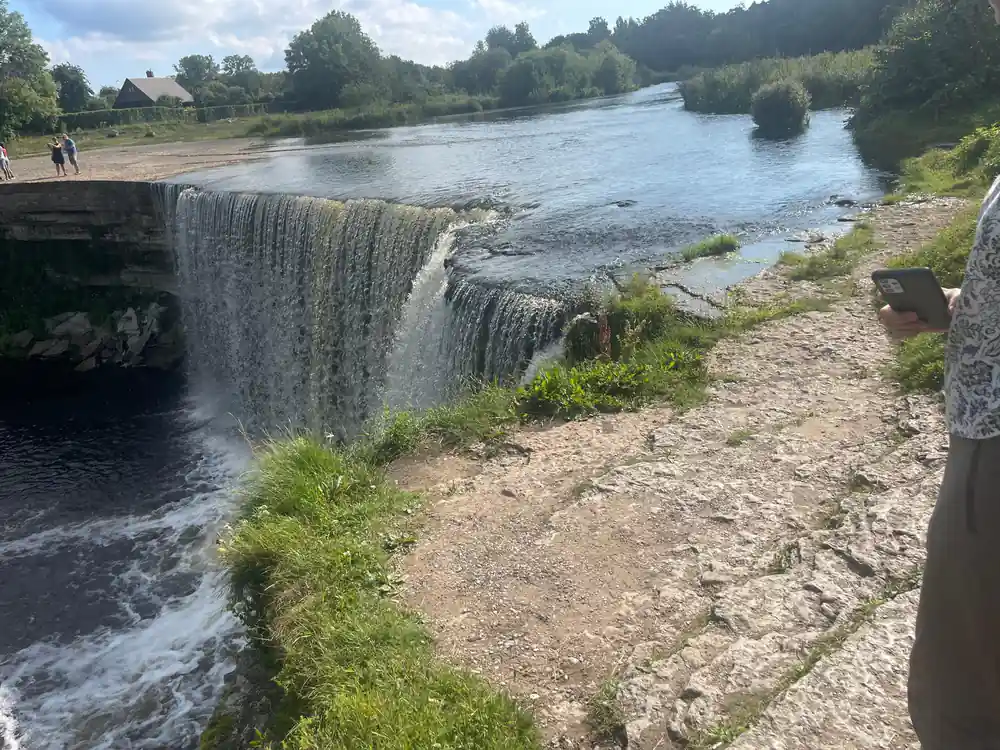
Keila waterfall is 6 metres high and spreads wide across its ledge, which makes it a forgiving subject for a slow shutter.[8] Flat, cloudy light is a gift at a waterfall: no blown-out white water, no hard shadows in the trees, and long exposures that turn the falling water soft and smooth. A polariser cuts the glare from wet rock, and a neutral density filter gives you seconds rather than fractions of a second.
Most photographers work from the bank and the small viewpoints on either side of the river, then walk upstream for reflections and autumn colour. The tour booked from this site stops at Keila Waterfall in the middle of the day, so you shoot in whatever light the Baltic sky offers.[1] Wipe the front element often. Spray is fine and constant here, and a single smear will soften every frame for the rest of the afternoon.
Pakri Cliffs: Composing the Coastal Frame
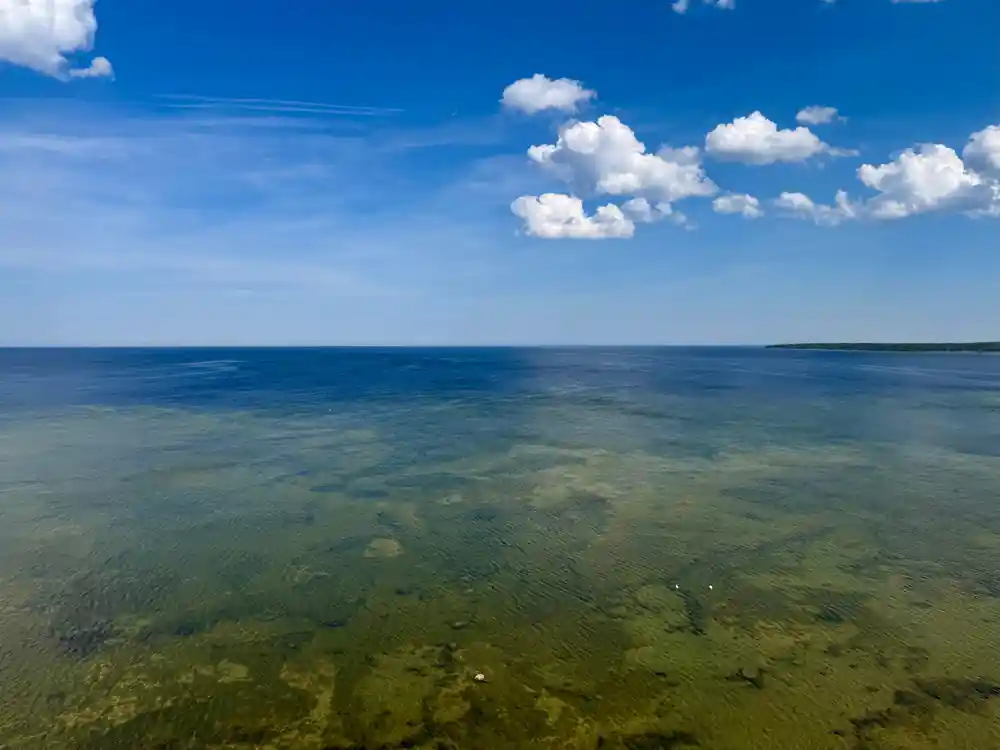
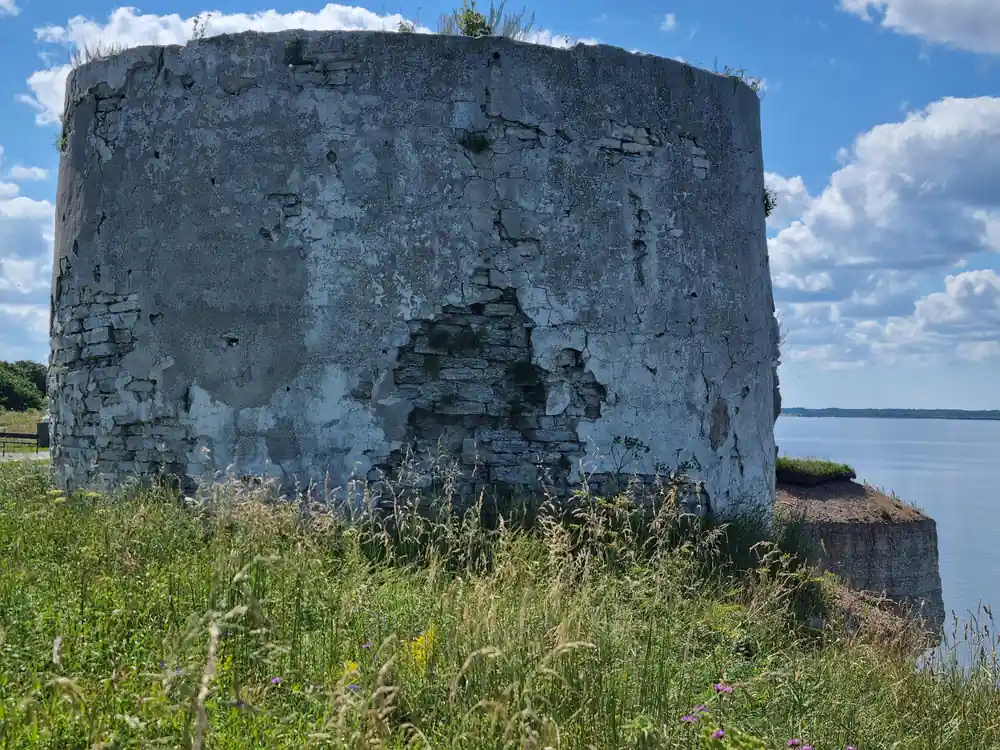
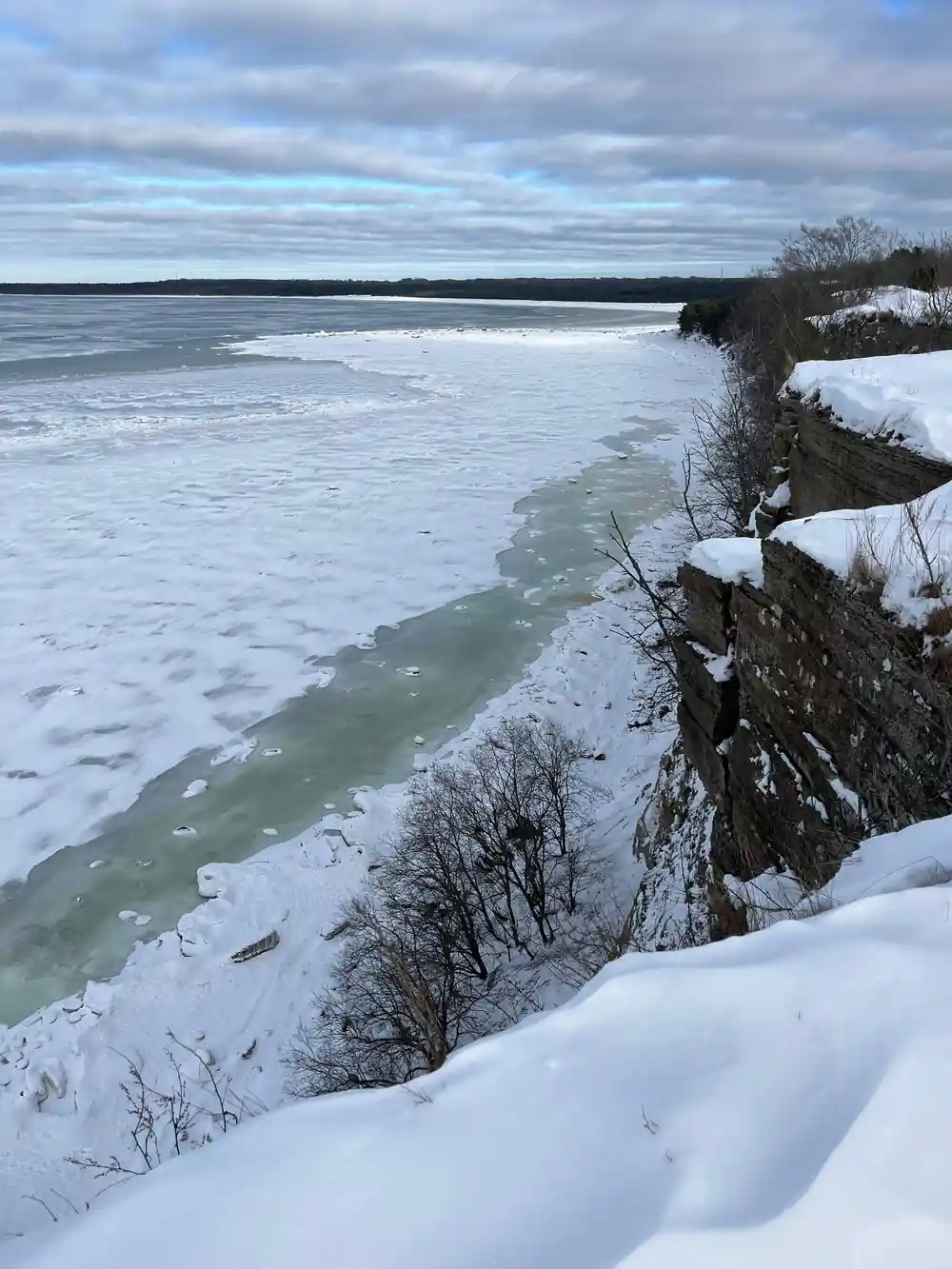
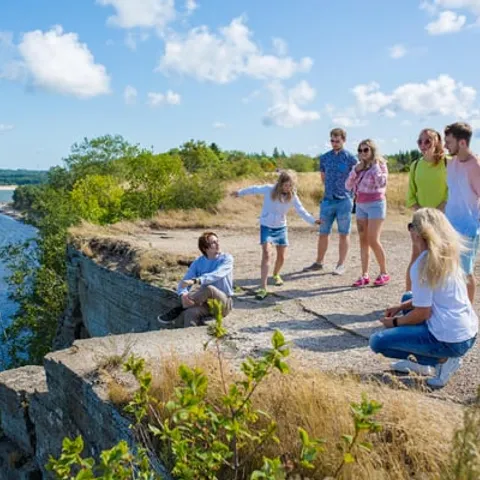
The Pakri cliffs drop straight into the Baltic and give you the wide, clean coastal frame that the quarry cannot. The tour stops at Pakri Lighthouse, the natural anchor for pakri lighthouse photos: white tower, dark sea, hard horizon, and a cliff edge that pulls the eye out of the frame.[1] Boulders and flat rock ledges at the foot of the cliffs reward the walk down when the sea is calm.
Composition here is mostly about the horizon and the foreground. Keep the horizon level and either low or high in the frame rather than dead centre, and find something close to the lens, a wet boulder, a stripe of foam, a line of grass, to give the sea some scale. Wind is the enemy: it shakes tripods and coats filters in salt. Work with the wind at your back where you can.
Golden hour at this coast is generous in a Baltic summer, with light that stays low and warm for a long time. Check the sunset time for your date and count backwards from the drive. A group tour keeps its own schedule, so if the lighthouse at sunset is the shot you want, plan a return visit or ask about a private arrangement.
from US$144
A six-hour small-group day trip from Tallinn that reaches Suurupi, Keila Waterfall, Paldiski, Pakri Lighthouse and Rummu Quarry.[1]
Dust and Spray: Protecting Your Gear
Between limestone dust at Rummu, fine spray at Keila and salt at Pakri, your kit takes a full day of punishment. A simple routine keeps it working. Keep one microfibre cloth for the front element and another for filters, blow dust and grit off before you wipe anything, and never dry-wipe a dry lens.
Change lenses inside the van or in a doorway rather than at the cliff edge, where the wind carries grit straight into an open mount. A rain cover earns its place in the bag even on a bright morning, because Baltic weather turns quickly, and a couple of silica gel sachets stop condensation when you get back into a warm car or hotel. A clear filter on the front of a lens is cheaper to scratch than the lens itself. Pack a small towel as well; wet hands make every dial harder.
Drone Operations and Restrictions
Drone rules in Estonia are the sort of thing you check before you travel rather than on the cliff top. Registration, height limits and no-fly zones around airports, towns and protected areas all apply, and this stretch of coast is watched by more than photographers. Read the current national rules and any local signs on the day, and treat a quiet cliff as sensitive ground.
Even where flying is allowed, practical limits matter more than paperwork. Wind at the cliffs is strong and gusty, the sea offers nothing to land on, and the quarry lake is a place where locals usually come to swim in summer.[6] People below did not come out for a drone, so keep your distance, keep the flight brief, and land if anyone looks uncomfortable.
Planning Your Photography Session
One day covers all three subjects if you plan the driving rather than the camera. The day trip booked from this site runs 6 hours, keeps a small group limited to 7 participants, and has a live tour guide in English.[1] It starts from US$144 and is rated 4.76 from 133 reviews.[1] You can reserve now and pay later, and cancel free up to 24 hours in advance for a full refund.[1]
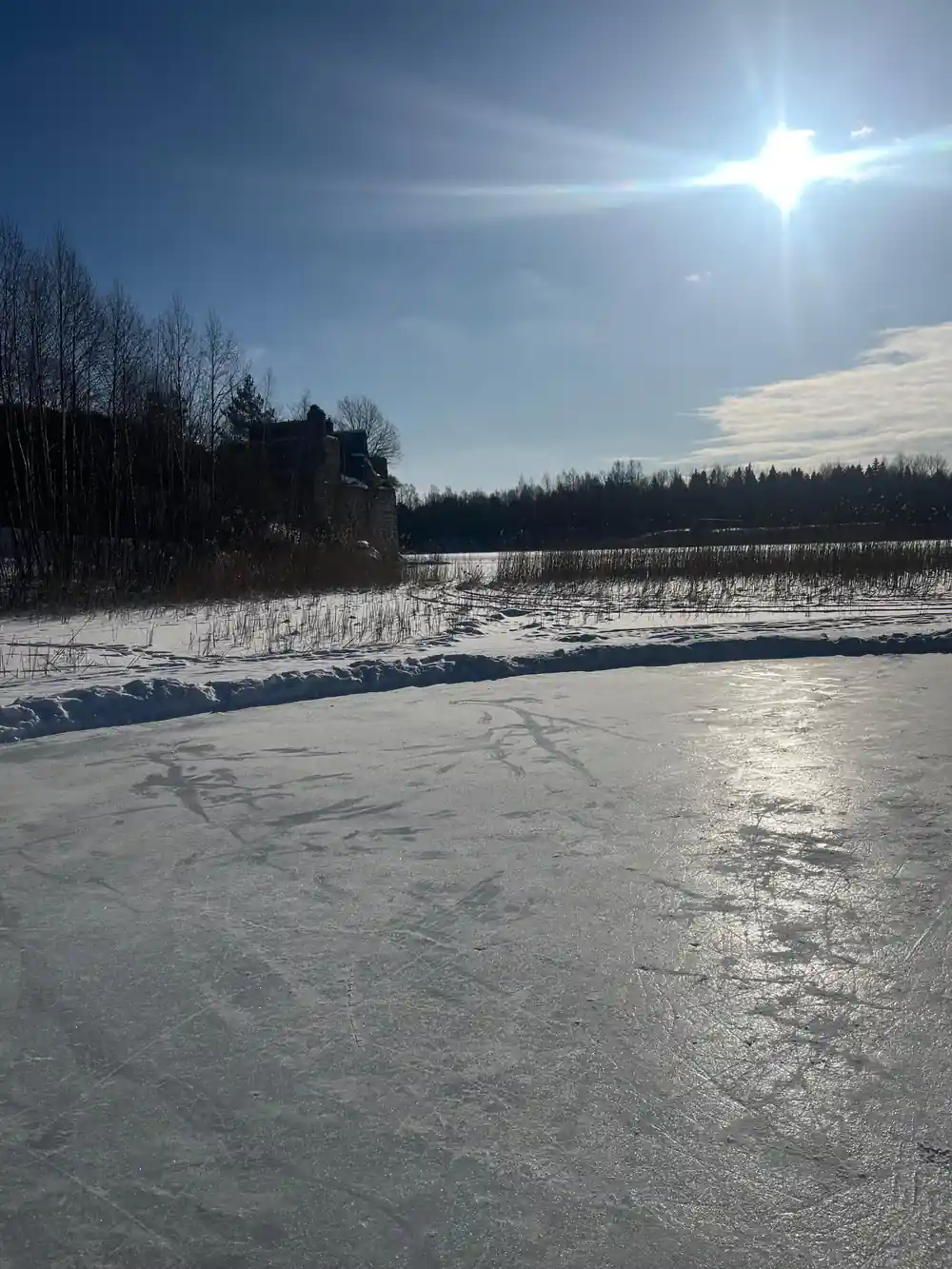
Independent travellers can drive or take the bus. Rummu Quarry and Prison to Tallinn is listed as 45 km and about 50 min by road.[3] FlixBus runs 2 rides each day between Tallinn and Rummu.[4] The quarry area is open all year round, Monday to Sunday from 10:00 to 20:00.[9] Check the Tallinn sunset time before you set out, and in winter a skating ticket includes access to the quarry, the rink, the prison and an audio guide, from €10 per person or €20 per family.[13]
If the dates do not work, other listings cover the same coast: a Paldiski and Rummu route from US$127, a Pakri landscape park and coast tour from US$167, and a Jägala Waterfall and Harju County tour from US$135.[2][5][14] Compare group sizes and hours before booking, and remember that the light, not the itinerary, decides what you bring home.
How long each coastal route takes
Tour durations in hours, taken from GetYourGuide listings:[1][2][5][14]
From prices for the coastal day routes
Adult from-prices in US dollars, each taken from its GetYourGuide listing:[1][2][5][14]. Child rates are not shown on those listings.
When to shoot, and when to book
Shooting the route
Rummu quarry
Start wide from the rim for the whole flooded bowl, then work closer to the water for reflections of the prison walls.
Keila waterfall
Use a polariser and a slow shutter, and wipe the front element between frames while the spray is falling.
Pakri cliffs
Level the horizon, find a foreground rock or line of grass, and keep the wind off your filter stack.
Gear care
Blow dust and salt off before you wipe anything, and change lenses inside the van rather than at the cliff edge.
Check the light
Look up the Tallinn sunset time for your date and plan the drive back around it while you still have light.
Book the Rummu, Pakri and Keila photography day
from US$144Reserve now & pay later