In a nutshell
- Rummu quarry sits in Harju County, west of Tallinn, roughly 45 km and 50 min by road from the city, with the old prison buildings right beside the water.[1]
- When the prison closed after 1991, the pumps that once kept the quarry and the prison dry were shut down, causing water to fill the quarry.[2]
- It is an unofficial and unguarded place for swimming or diving, where locals usually come to swim in summer, with water of 15.0-20.0 °C.[3][4]
- The site is open all year round, Monday to Sunday, from 10:00 to 20:00, so an early start and a late afternoon both work.[5]
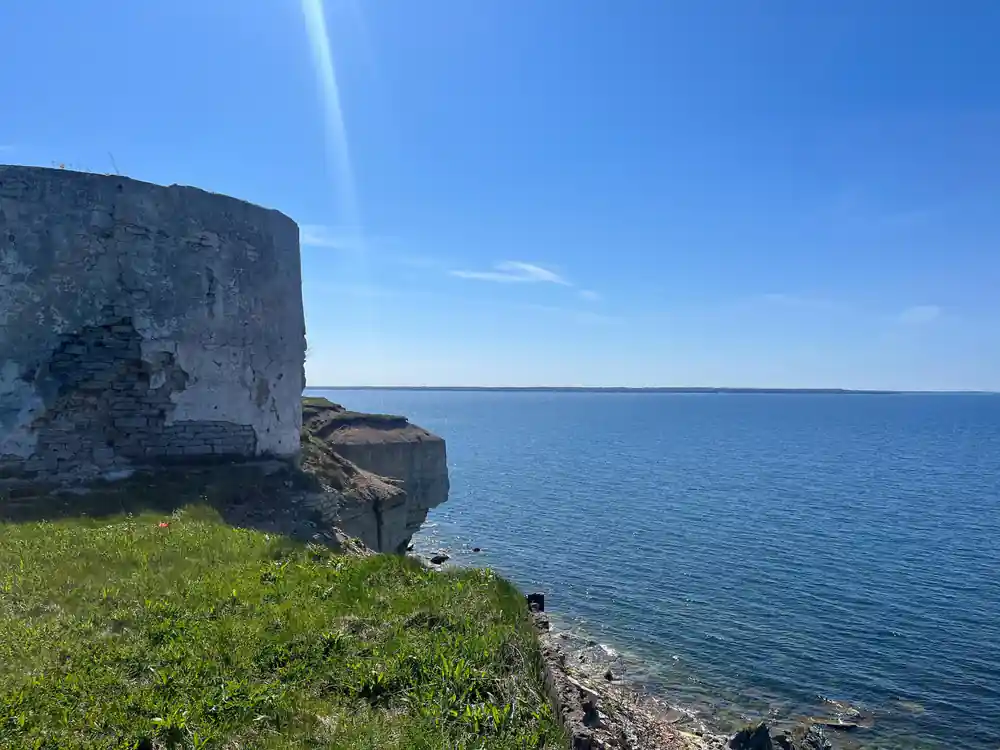
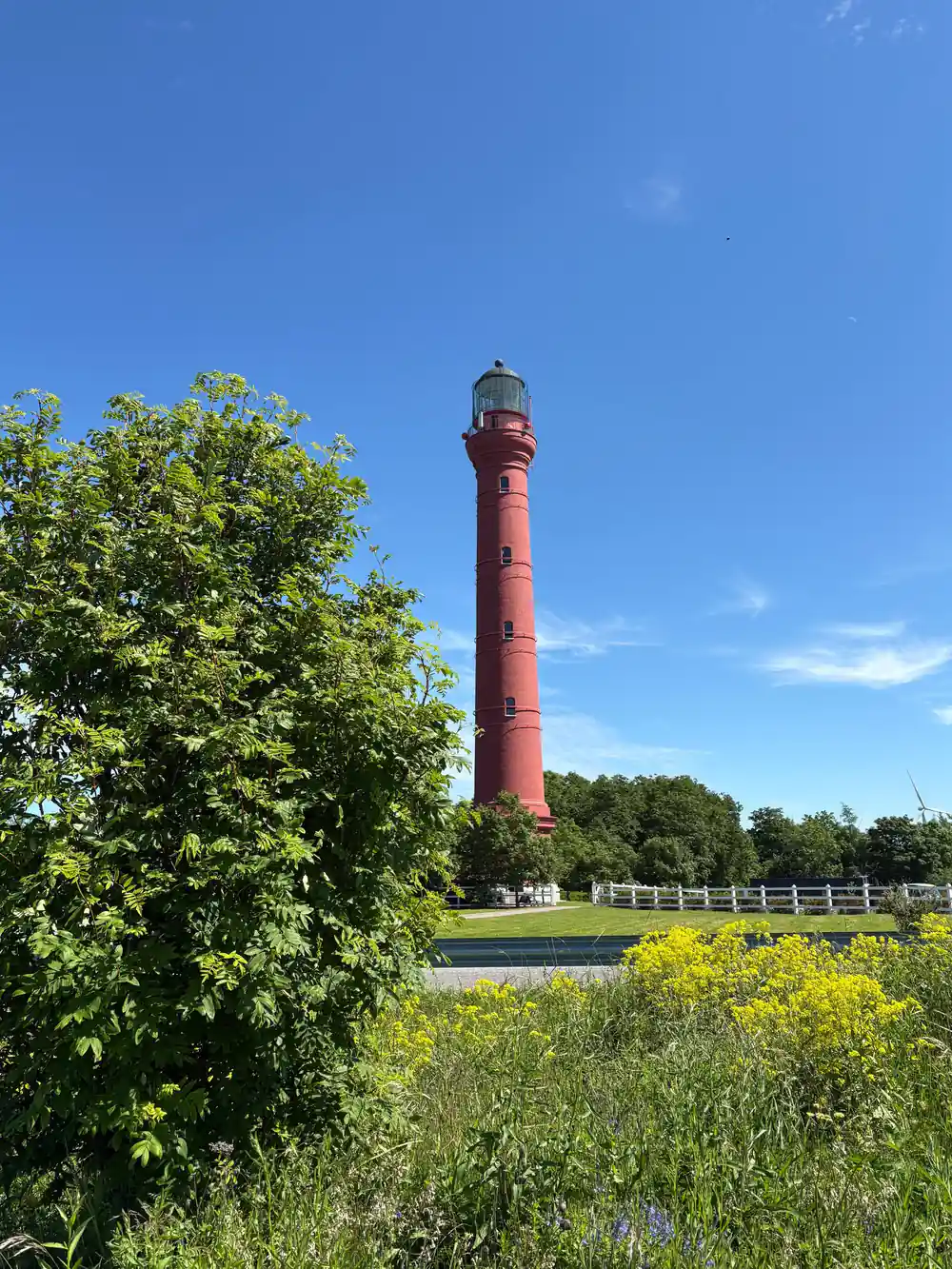
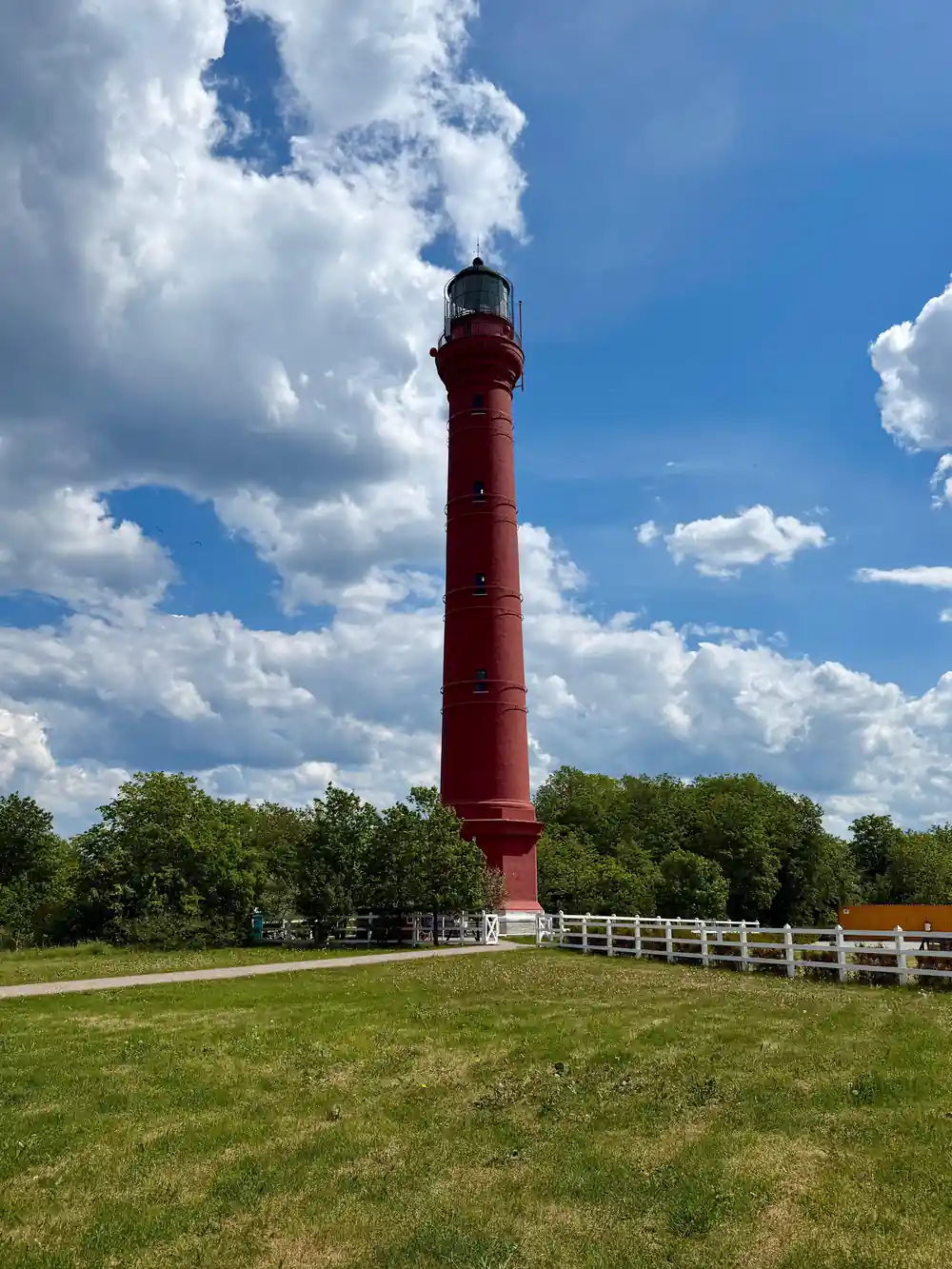
- A 6 hour small group day tour from Tallinn covers Suurupi, Keila Waterfall, Paldiski, Pakri Lighthouse and Rummu Quarry.[6]
- Top choice Rummu, Cliffs & Waterfall from US$144 Duration6 hours[6]Group sizeSmall group, limited to 7[6]Rating4.76 from 133 reviews[6]GuideLive guide: English[6]CancellationFree cancellation up to 24 h[6] Check availability
- Jägala Waterfall & Harju from US$135 Duration4 hours[7]Group sizeSmall group, limited to 7[7]Rating4.86 from 114 reviews[7]GuideLive guide: English[7]CancellationFree cancellation up to 24 h[7] See this tour
- Pakri Park & Keila Falls from US$167 Duration5 hours[8]Group sizePrivate group[8]Rating4.69 from 8 reviews[8]GuideLive guide: English, Estonian[8]CancellationFree cancellation up to 24 h[8] See this tour
FlixBus runs 2 rides each day between Tallinn and Rummu and when travelling with FlixBus, you can expect free Wifi, power sockets and a guaranteed seat for your journey.
The drowned prison quarry, and how to see it
Transport
- FlixBus runs 2 rides each day between Tallinn and Rummu.[9]
- Rummu Quarry and Prison to Tallinn by road: 45 km, estimated 50 min.[1]
- The day tour runs as a van route between Suurupi, Keila Waterfall, Paldiski, Pakri Lighthouse and Rummu.[6]
- Small group, limited to 7 participants, with a live English-speaking guide.[6]
On the ground
- Open all year round, Monday to Sunday, 10:00 to 20:00.[5]
- Summer water temperature at the quarry is 15.0-20.0 °C.[4]
- The quarry is an unofficial and unguarded place for swimming or diving, where locals usually come to swim in summer.[3]
- In winter, the skating rink ticket includes access to the quarry, the rink, the prison and an audio guide.[10]
Rummu Quarry Prison History
Rummu began as a hole in the ground, and everything since has grown out of that. The stone here is Vasalemma limestone, a detritic limestone with a marble-like structure and texture that is easy to process and is locally known as Vasalemma marble.[11] It is pale and whitish-grey, and it turns up in buildings far beyond the quarry fence. Standing at the rim today, you can still read the shape of the old workings: stepped benches where blocks were lifted out, tracks cut down towards the floor, and pale dust over everything.
The quarry and the prison grew up together. For most of the twentieth century this was a working site with a closed institution at its edge, and the two were never separate in local memory. Murru prison stood on the rim, and the pit below it had to be kept dry. Pumps ran continuously, holding back the groundwater that always wants to fill a limestone pit. That single piece of engineering is the hinge of the whole story. While the pumps worked, Rummu was a quarry. When they stopped, it became a lake, and the two uses of the site have been tangled together ever since.
The Soviet prison regime at Murru
For decades this was a place most people knew by name and not by sight. Murru prison was a Soviet-era correctional institution, and the quarry beside it belonged to the same compound of walls, yards and long grey buildings. For years the phrase Rummu quarry prison described one place to local people: there was no way to talk about the pit without talking about the people who lived and worked around it.
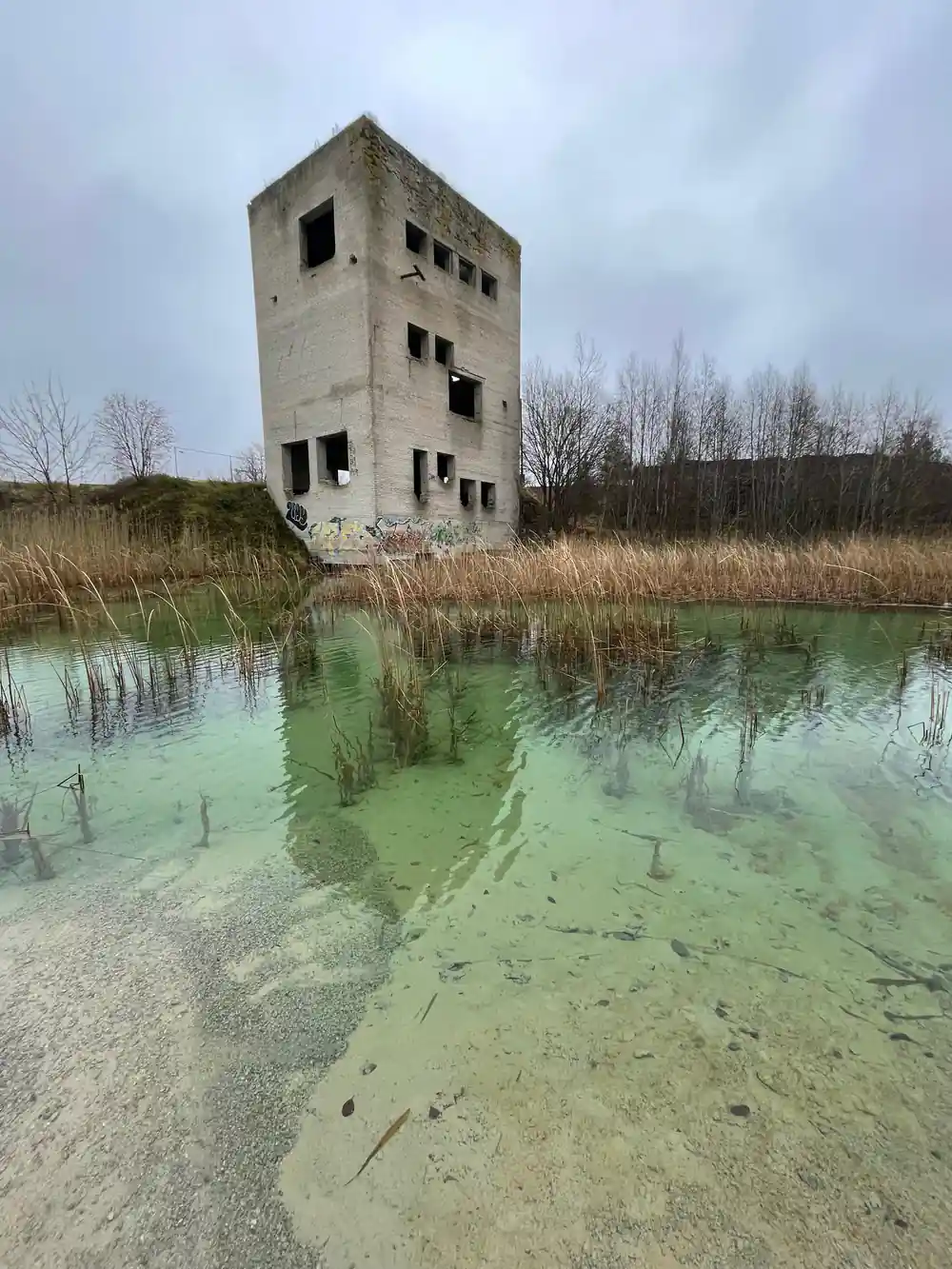
Walking the site now, the prison side is the quietest part. Concrete stairwells climb into nothing, windows frame sky where floors used to be, and birch and moss have moved into the courtyards. Watch for the small details, the metal fixings still set in the walls, the shallow steps worn smooth, the tiles underfoot in the doorways. It is a strange kind of monument, and it is the reason Rummu quarry and Murru prison are still spoken of as a single place.
The scale of the place takes a moment to register. From the rim the walls look low; up close they tower over you, and the courtyard layout still reads clearly from above. There is a great deal to take in at close range: the stairwells, the narrow windows, the pale concrete against dark water, and the way moss and saplings have moved into every corner of the ruins.
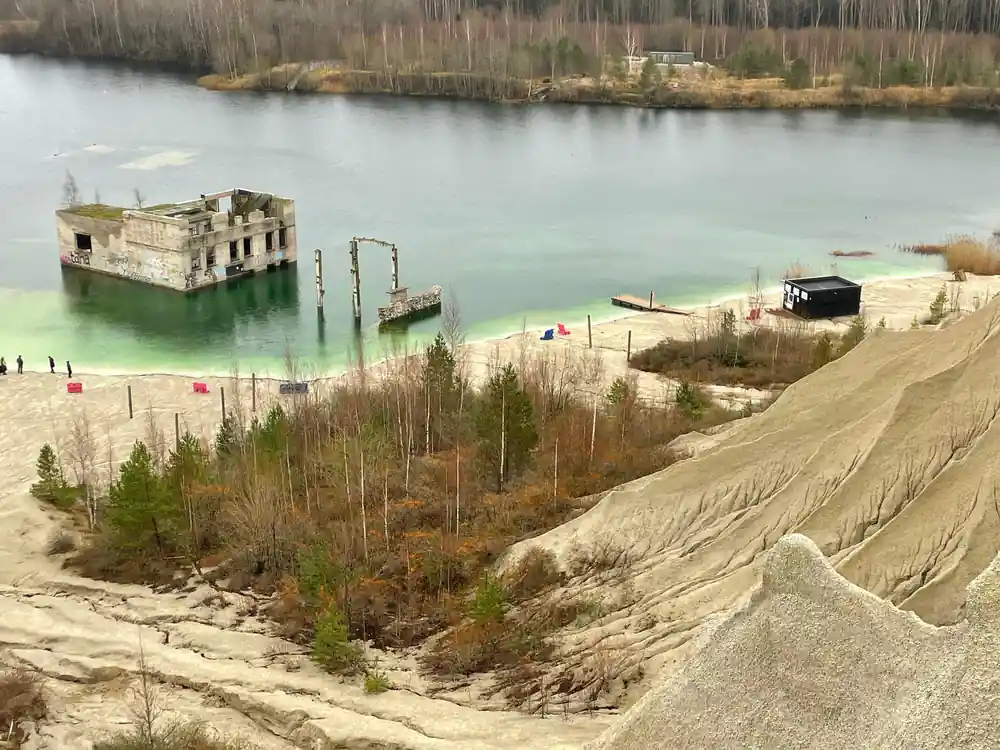
Prison walls and stairwells still stand above the turquoise water
The moment the pumps stopped
When the prison closed after 1991, pumps that once kept the quarry and the prison dry were shut down, causing water to fill the quarry.[2] It did not happen in one afternoon. Groundwater came back through the limestone the way it had always wanted to, and the lowest parts of the pit went under first. Nothing was drained, dismantled or cleared away in advance.
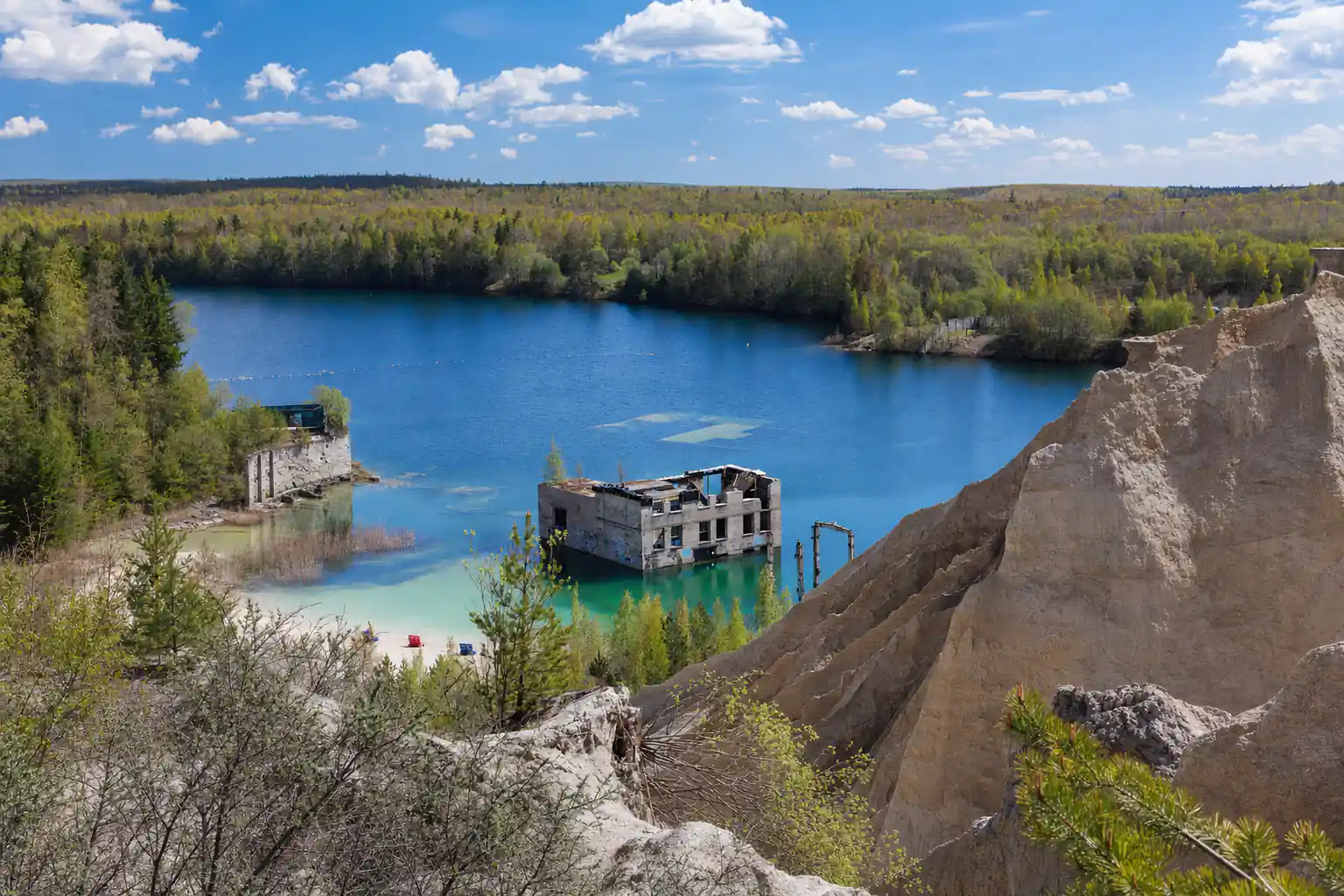
Photographs of Rummu quarry before the flooding show a dry, dusty bowl with terraced walls and a track running down to the bottom. Today the same walls continue below the surface. Trees stand in the shallows at the edges, their trunks half in the water, plants have taken hold along the old steps, and the terraces read as pale lines under the turquoise surface. In winter the shallows freeze, and the lake takes on a different shape entirely.
Submerged buildings and what divers find
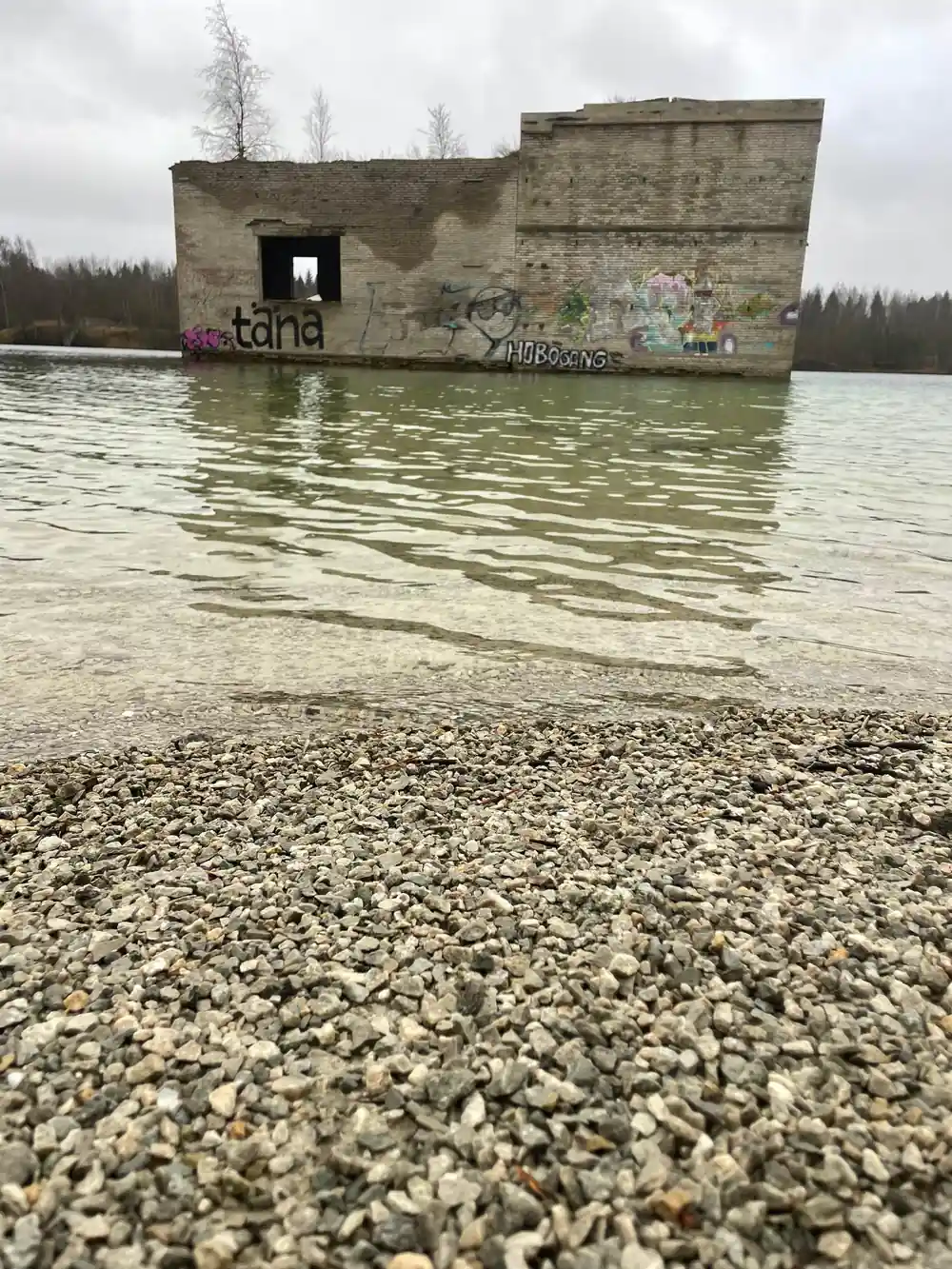
The lake that filled the pit has a maximum depth of 14 metres.[12] In summer the water sits at 15.0-20.0 °C.[4] Below the surface, walls, staircases and building shells are still standing, and that is what makes the site so unusual for divers: this is not a reef or a wreck, it is a working place that simply carried on under water.
Diving here is organised rather than casual. Rummu Diving & WaterSports runs weekly dives for certified divers, open water dives for people whose courses are incomplete, and full OWD courses.[13] Swimming is a different matter. Rummu quarry is an unofficial and unguarded place for swimming or diving, where locals usually come to swim in summer.[3]
Visibility varies with the season, the weather and how much the site has been disturbed. Divers usually work at shallower depths where the light is best and the structures closest to the old working floor sit. If you are not diving, the bank still gives you plenty: the sunken edges of the terraces, the trees standing in the shallows, and the pale walls running down into the green.
from US$144
A 6 hour small group day tour from Tallinn covering Suurupi, Keila Waterfall, Paldiski, Pakri Lighthouse and Rummu Quarry, with a live guide.[6]
The white sand slopes above the water
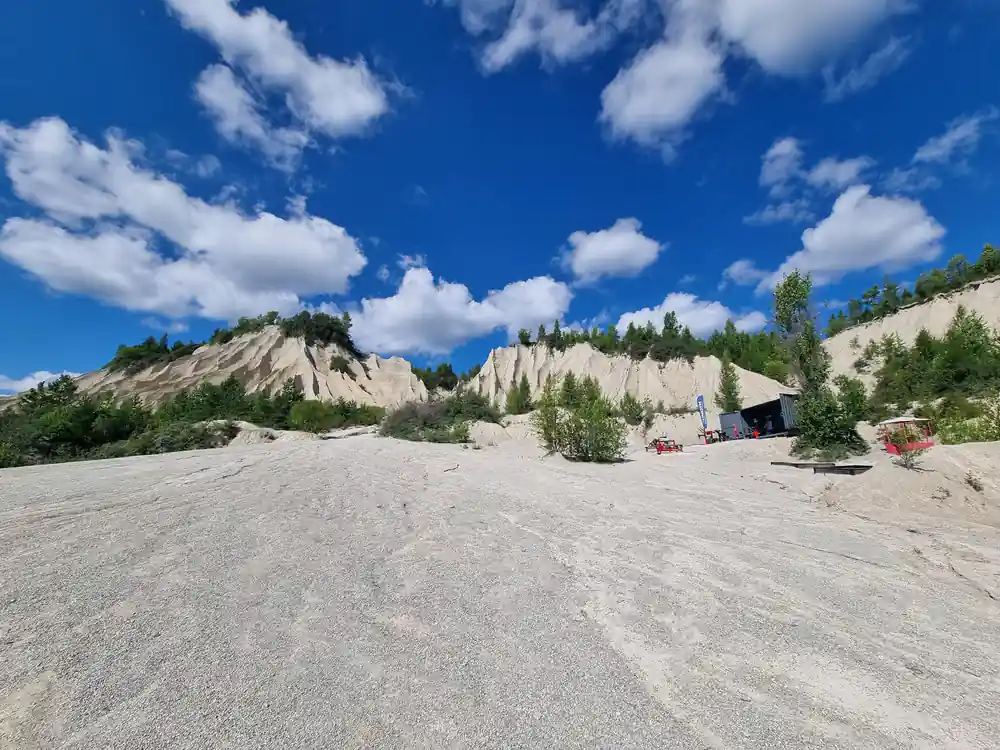
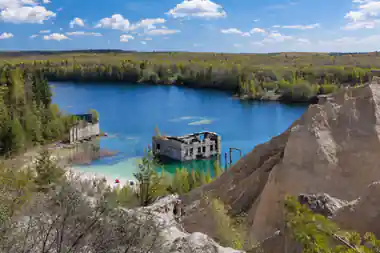
The spoil heaps left by the digging give the site its look from a distance: pale sand slopes, almost white in strong light, rising above the turquoise water. The sand is soft and loose underfoot, and in places the edges have crumbled into bare, sandy cliffs that drop straight to the water. It is the kind of landscape that photographs well in any weather, and it changes colour hour by hour as the sun moves.
Trees have taken hold along the rim, so the edges are greener than you expect from a quarry, and there are stretches of rocky beach where boulders meet calm water. From above, the whole place looks like a coastal dune field with a lake in the middle of it.
Early and late are the best hours for the slopes, when the sand and the water both soften into pastel tones and the old walls throw long shadows across the terraces. Midday sun is harder, flattening the turquoise into a bright glare, so sunglasses and a hat earn their place in your bag. From the rim paths you can take in the whole bowl at once, and the view shifts with every step along the edge.
Why the water turned turquoise and clear
Limestone water stays clear: once the dust has settled there is very little suspended silt left to cloud it, and the pale rock below throws light back up through the water. Sunlight entering clear water is scattered by the water itself, and the blue and green parts of the spectrum survive longest. On a bright day the quarry turns turquoise. Under low cloud it goes grey-green, and after heavy rain it looks almost milky at the edges.
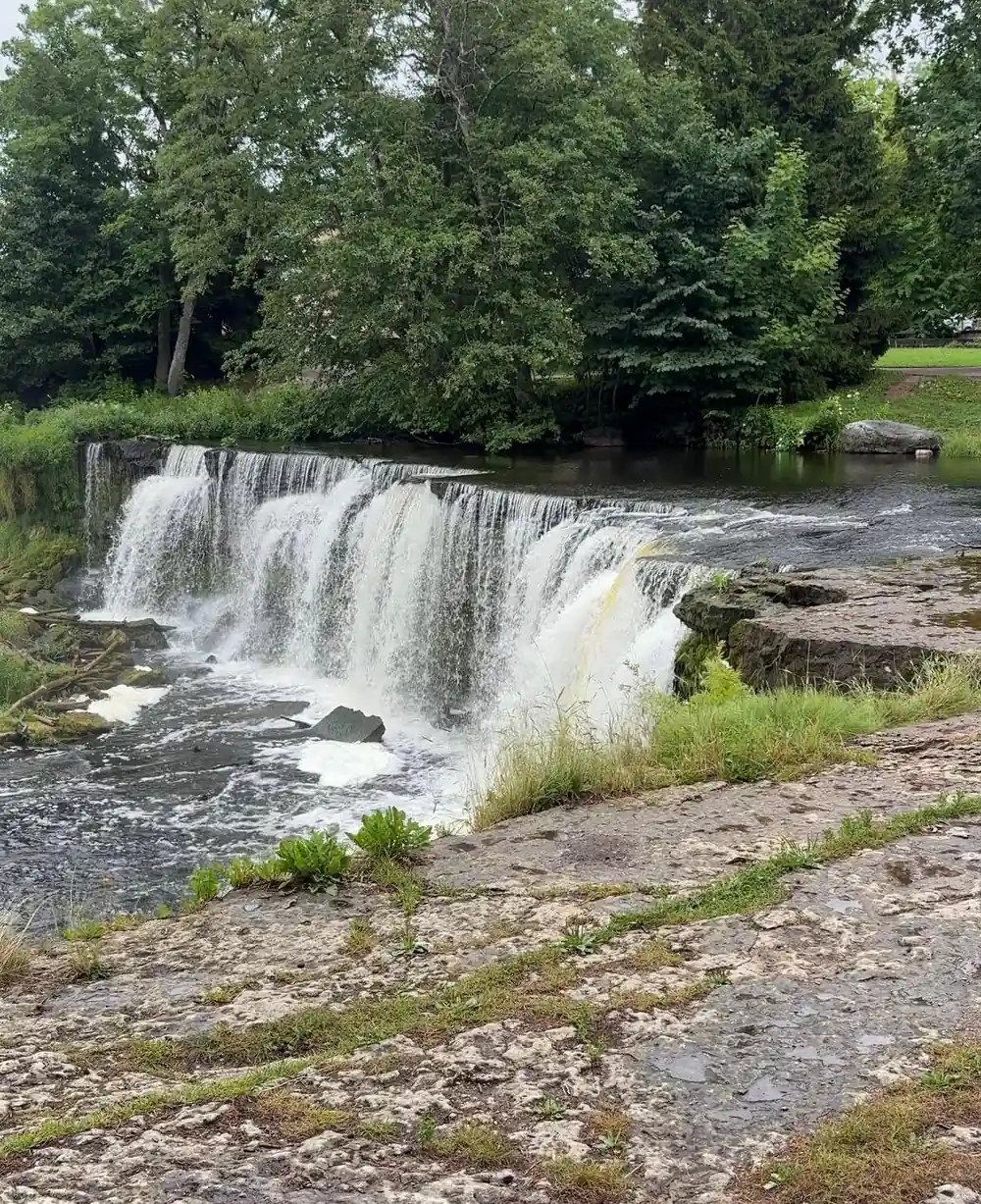
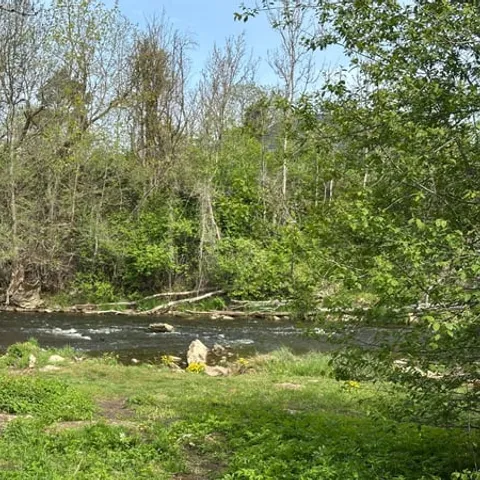
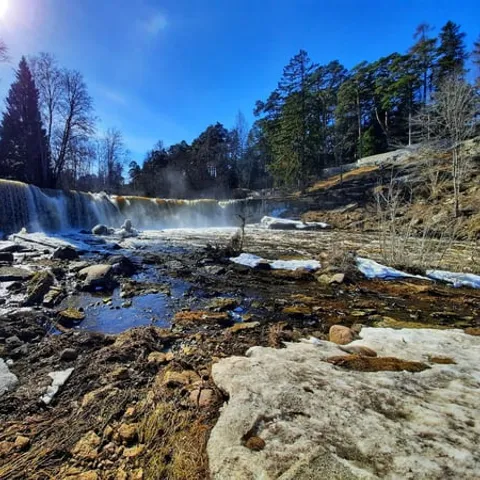
The colour changes with the weather and the season. Wind stirs the surface, rain washes sand down the slopes, and the flat light of autumn flattens the hue. Keila waterfall is 6 metres high,[14] and it pairs well with the quarry on the same day, especially after rain, when the river carries peat-brown water over the ledge.
Because the water is calm and shallow in places, you can often see the terraces and the drowned walls from the bank without getting wet. Rain changes all of it: runoff carries pale silt into the shallows and the edges go milky for a while before clearing again. Wind is the other variable, ruffling the surface so the light scatters differently across the bay.
From abandoned pit to working attraction
Rummu Quarry is open all year round, Monday to Sunday, 10:00 to 20:00.[5] In winter, a ticket to the Rummu skating rink includes access to the Rummu quarry in winter, the skating rink, the prison and an audio guide.[10] The Rummu Caravan Park, located in Rummu Quarry, offers overnight accommodation for motorhomes, caravans and tents.[15] Sauna rituals are offered at Paekalda Holiday Center.[16]
Getting there without a car is possible: FlixBus runs 2 rides each day between Tallinn and Rummu.[9] By road, the transfer from Rummu Quarry & Prison to Tallinn is 45 km, with an estimated time of 50 min.[1] If you would rather have the Rummu quarry history filled in as you go, the small group day tour from Tallinn runs 6 hours and stops at Suurupi, Keila Waterfall, Paldiski, Pakri Lighthouse and Rummu Quarry, with a live English-speaking guide and a group limited to 7 participants.[6]
How long the Rummu and waterfall day tours run
Durations as listed on GetYourGuide for these Tallinn day tours.[6][7][8][17]
What a Rummu day out costs
Adult from-prices in US dollars as listed on GetYourGuide.[6][7][8][17]
When to visit Rummu Quarry
Planning your visit
Pick a season
Summer for the turquoise water and a swim, winter for the rink and the prison buildings seen from the ice.
Sort out transport
FlixBus runs 2 rides each day between Tallinn and Rummu, and the road transfer to Tallinn is 45 km, estimated 50 min.[1][9]
Book a guided day
A small group tour links Suurupi, Keila Waterfall, Paldiski, Pakri Lighthouse and Rummu Quarry in 6 hours.[6]
Pack for the coast
Waterproof jacket, shoes with grip for the sand slopes, swimwear if you plan to get in, and a towel. Coastal wind can make it feel colder than Tallinn.
Check before you go
Opening hours, tour times and availability shift with the season. Confirm the details before you travel out from Tallinn.
See the drowned quarry with a guide who knows the story
from US$144Reserve now & pay later