In a nutshell
- Vasalemma marble is the local name for Vasalemma limestone, a detritic limestone with a marble-like structure and texture.[1]
- The quarry filled with water after the prison closed following 1991 and the pumps that kept it dry were shut down. The lake is 14 metres deep at its maximum.[2][3]
- One tour links Suurupi, Keila Waterfall, Paldiski, Pakri Lighthouse and Rummu Quarry in 6 hours, in a group limited to 7, from US$144.[4]
- Rummu Quarry is open all year round, Monday to Sunday, 10:00 to 20:00.[5]
- The quarry is an unofficial and unguarded place for swimming or diving, where locals usually come to swim in summer.[6]
- Top choice Rummu Quarry & Cliffs from US$144 Group sizeSmall group, up to 7[4]GuideEnglish[4]Duration6 hours[4]Rating4.76 from 133 reviews[4]CancellationFree up to 24 hours before[4] Check availability
- Paldiski & Rummu Quarry from US$127 Group sizeSmall group, up to 8[7]GuideEnglish[7]Duration7 hours[7]Rating4.15 from 6 reviews[7]CancellationFree up to 24 hours before[7] See this tour
- Pakri Coast & Keila Falls from US$167 Group sizePrivate group[8]GuideEnglish, Estonian[8]Duration5 hours[8]Rating4.69 from 8 reviews[8]CancellationFree up to 24 hours before[8] See this tour
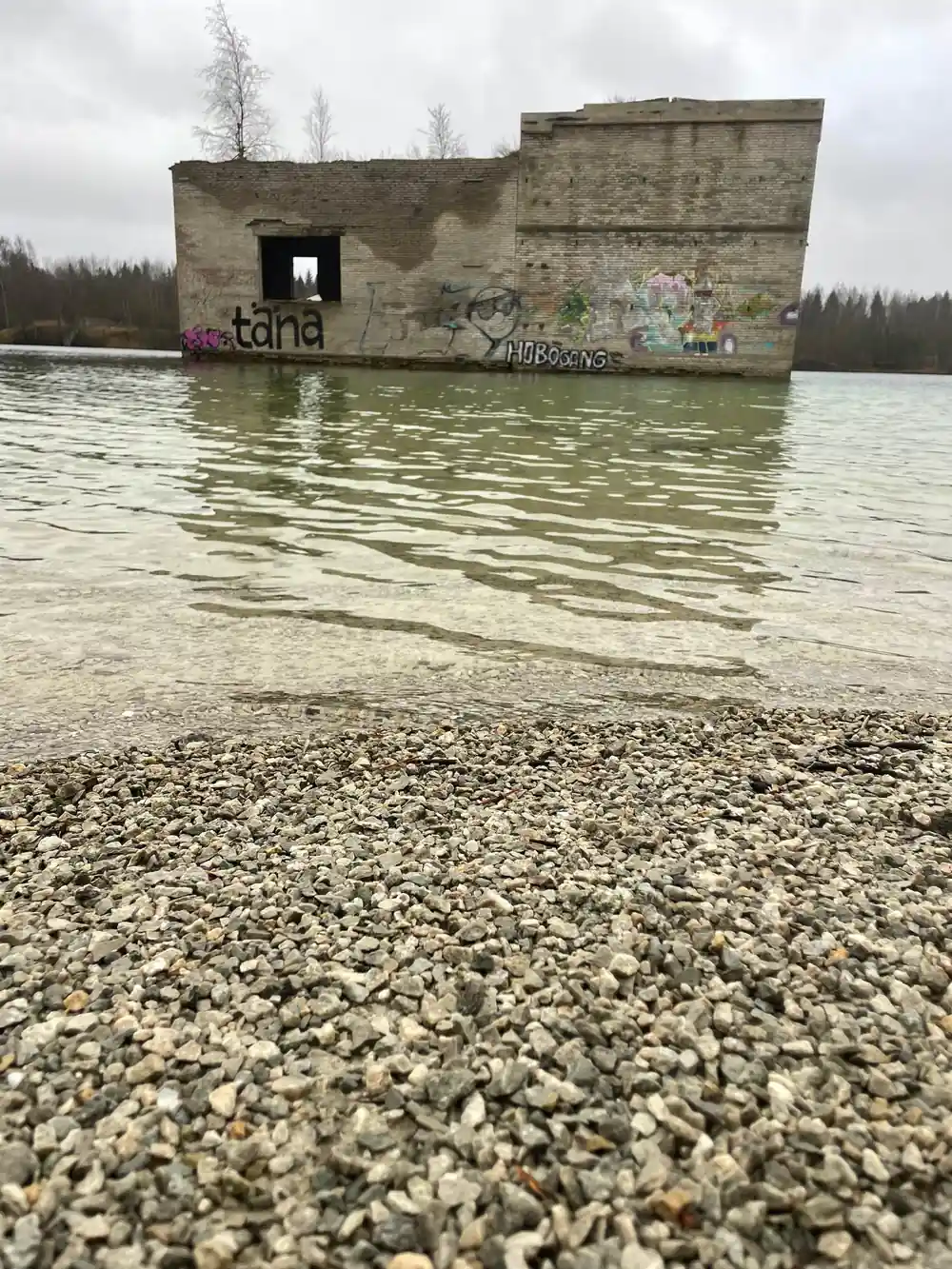
When the prison closed after 1991, pumps that once kept the quarry and the prison dry were shut down, causing water to fill the quarry.
Is the Rummu quarry day tour worth it?
Getting there and opening times
Why Vasalemma Limestone Became Marble
Estonia's own building stone is limestone: a sedimentary rock laid down in shallow seas, made of the shells and skeletons of small marine creatures, and split by the metre into blocks, steps and wall stones. Around Vasalemma, west of the capital, one variety of it is denser and finer than the rest. It is a detritic limestone with a marble-like structure and texture, and it is easy to process.[1]
The name Vasalemma marble is a local nickname rather than a geological label.[1] True marble is limestone that heat and pressure have cooked until its crystals lock together. Vasalemma's stone never went through that. It is simply even and fine enough that, once sawn and rubbed smooth, it takes a polish and reads as marble on a staircase, a sill or a grave marker. One is a metamorphic rock; the other is a very good limestone that learned to dress like one.
For a visitor, the useful part is that the polished grey stone in Tallinn's doorways, thresholds and shopfronts is local. Once you notice the look, flat grey with faint darker banding, you see it in kerbs and paving slabs, in the bases of old walls, in the steps up to church doors. Baltic limestone turns up in a hundred different jobs, and the pleasure of a limestone town is recognising the same material in all of them.
How Prisoners Cut and Moved the Stone
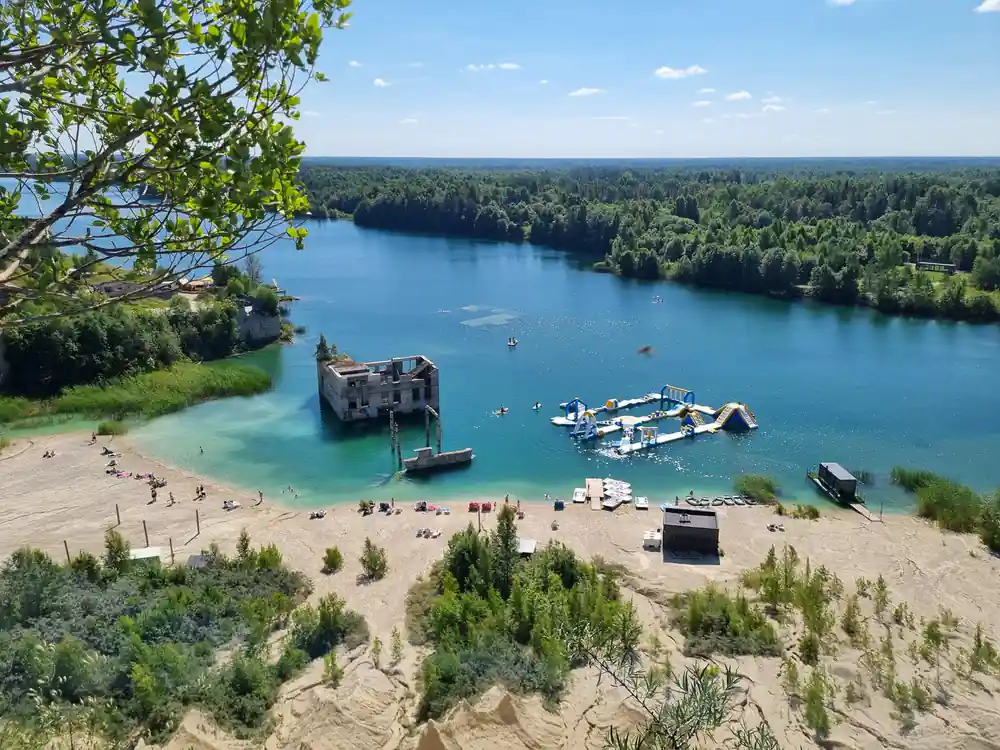
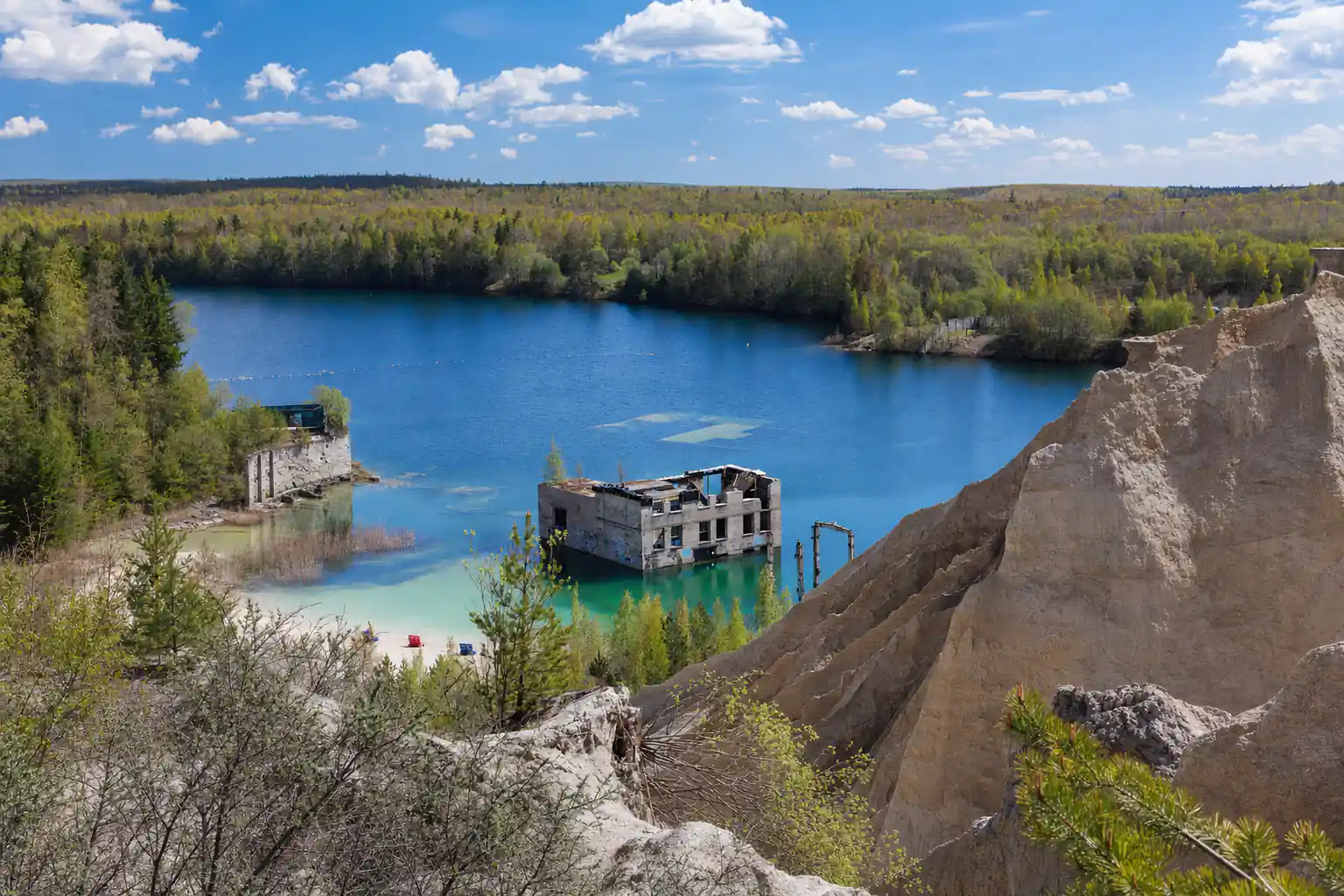
Rummu's lake lies in a worked pit, and the pit lies beside a prison. Pumps kept both the quarry and the prison dry, and when the prison closed after 1991 those pumps were shut down and water filled the quarry.[2] Today terraces of pale stone step down into green water, wall stubs stand clear of the surface, and one multi-storey building has its lower floors under the lake.
Cutting limestone is slow, deliberate work. A block is split along its bedding planes with wedges, plugs and feathers: a row of holes drilled, iron pins hammered in, and the stone cracked in a straight line. Then the block is levered free, rolled onto a sledge or a barrow and dragged to the saw. The tools changed over the decades, from hand steel to wire to circular blades, but the dust did not: fine white powder that settles in hair, eyelashes and lungs.
At Rummu the quarry and the prison were one working landscape, and the heavy work was done by prisoners. That pairing is what makes the site unusual: industry and confinement in the same view, the place where stone was cut and the place where men were held divided by a wall and a gate. Guides on the day tours tell the story on the ground, and the ruins do most of the talking.
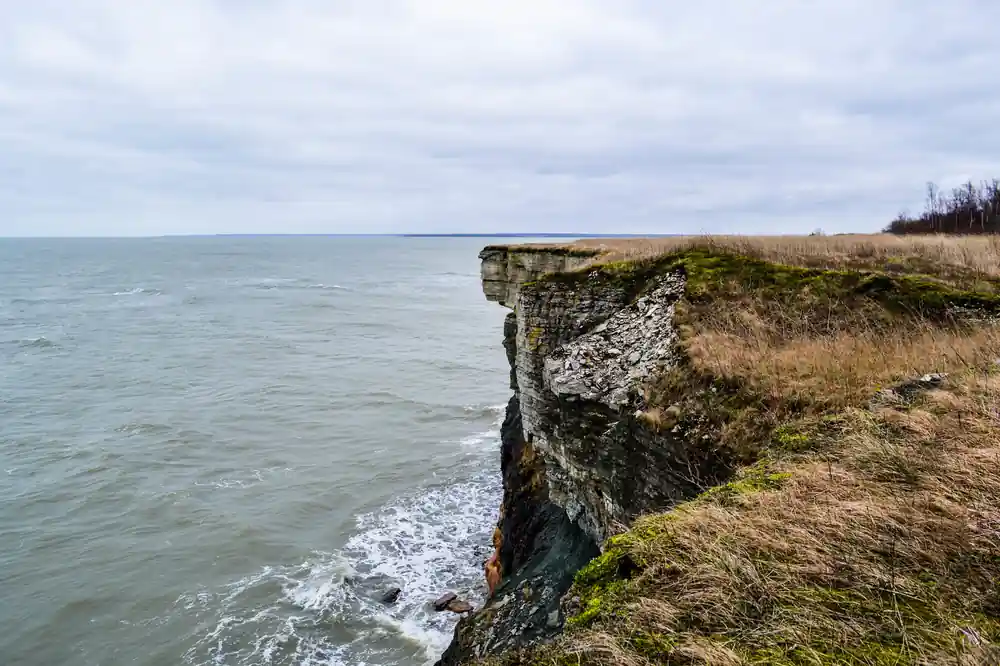
Layered limestone in the cliff face above the Baltic.
Where Vasalemma Stone Landed in Tallinn
Tallinn's old town is a limestone town: walls, towers, vaulted cellars, the lower courses of the merchants' houses, the pavements, all from the same coastal bedrock. The dressed stone, the squared blocks with clean edges, was quarried west of the city, in the Vasalemma country and along the coast. Walking the lanes of the old town, you are looking at the finished end of a quarrying trade.
Away from the old town the stone turns up in more ordinary places. Look at the plinth under a wooden house in Kalamaja, the retaining wall holding a street above a railway cutting, the kerb edging on a park path, the steps of a school. Limestone was local and easy to work, and it became the standard material for anything meant to last through Estonian winters.
The practical pleasure is doing both ends in one day. A morning in the old town looking at the sawn, weathered, soot-darkened face of the stone, then an afternoon at the quarry and the cliffs seeing where it came from. The day tour booked from this site runs that loop in one go, with a guide who knows the quarry, the prison and the coast.
Limestone as Estonia's National Stone
Estonians call limestone paas, and it is hard to overstate how ordinary it is here. It is the stone of churches and manor houses, of farm walls and boundary markers, of the flat slabs that carry a path across a wet field. It fades to grey, grows lichen and looks good doing it. Baltic limestone is really a family of stones, but on this coast it is the same material again and again, in the ground and in the buildings standing on top of it.
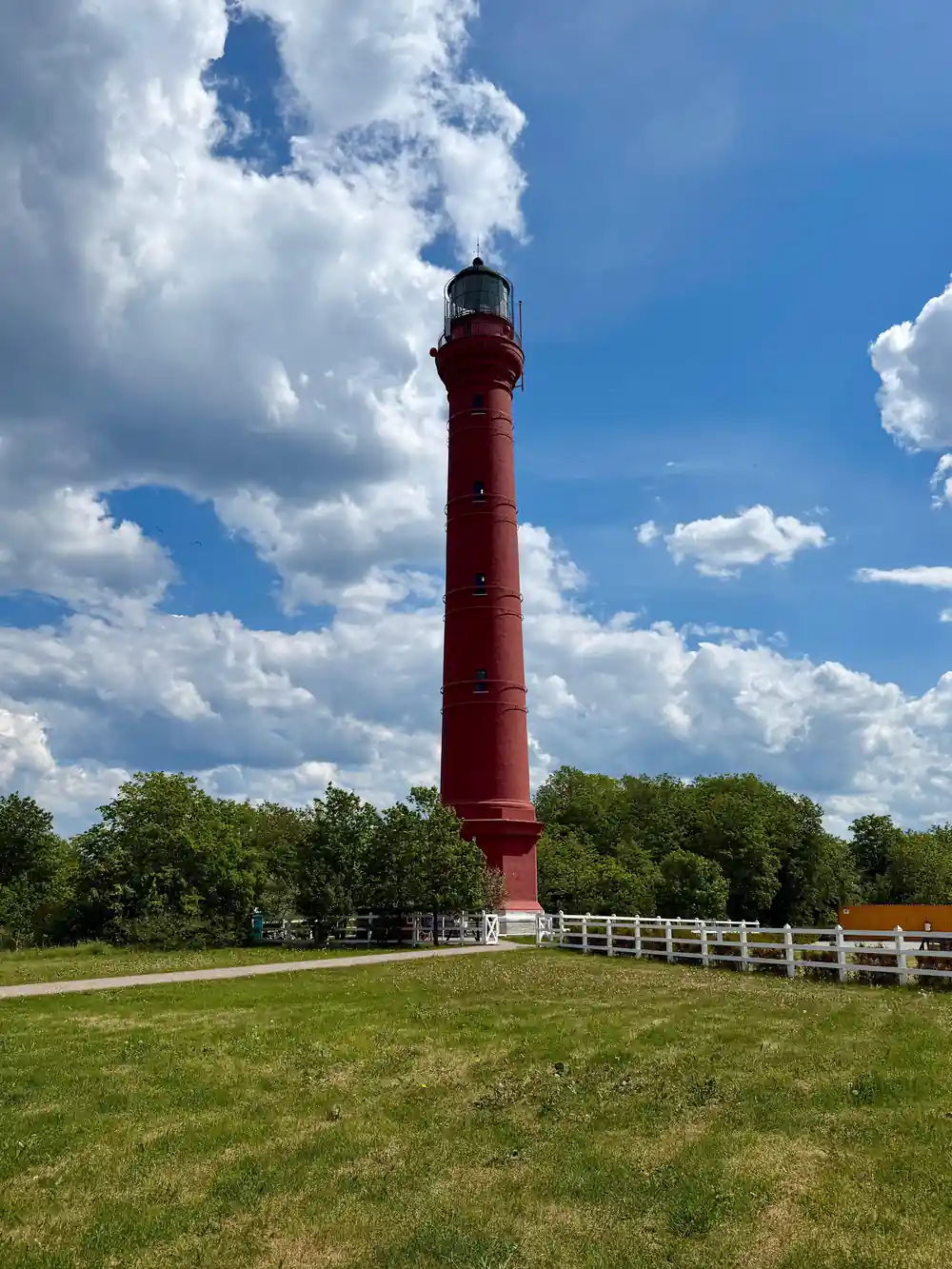
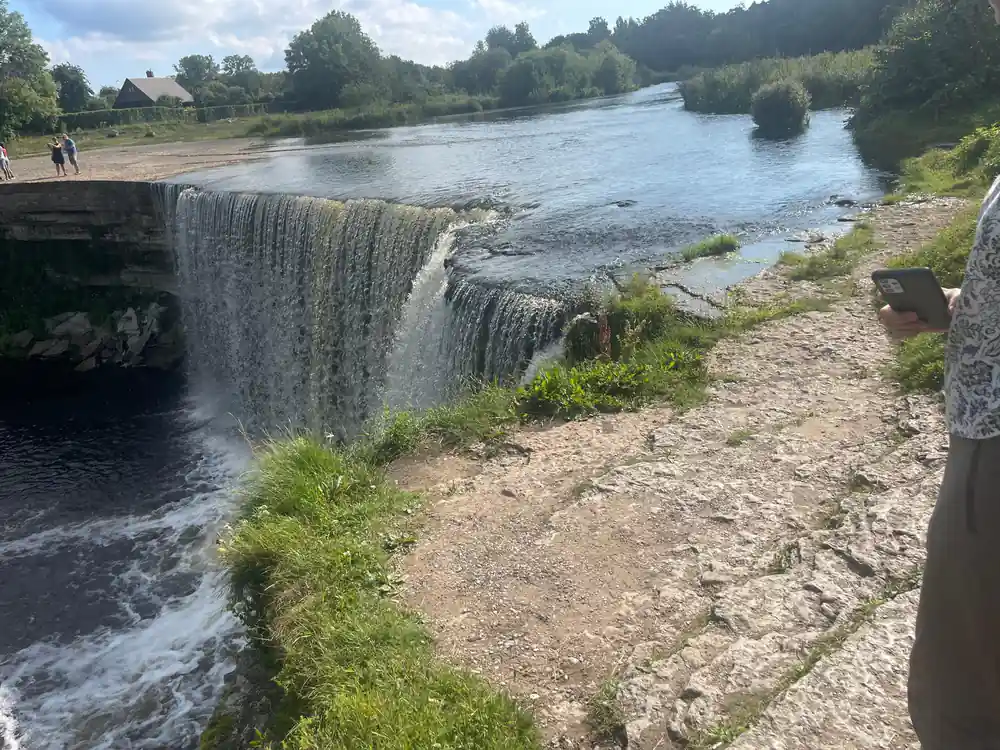
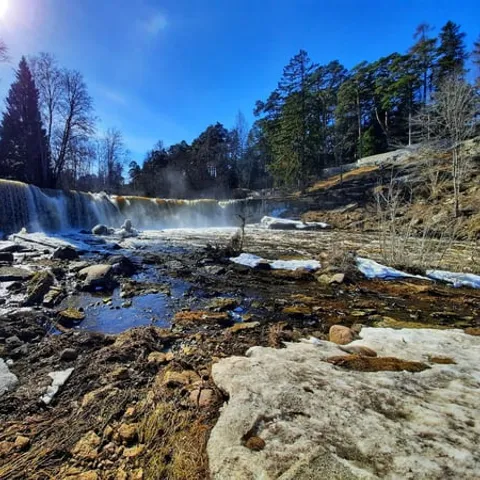
The north Estonian coast is where the rock meets the sea in a long line of cliffs. On the day tour you see it at Suurupi, at Paldiski and at the Pakri lighthouse, where the edge of the plateau falls away and the layers show in section. Keila Waterfall is 6 metres high,[14] and it is one of the stops on the same route.[4]
There is a quiet national pride in the material. It is what the country is made of, quite literally, and it is what the country builds with when it wants to look like itself. For a traveller the reward is a landscape that reads clearly: a flat plateau, a cliff edge, a beach of flat stones, a quarry face, and a town built out of all of it.
from US$144
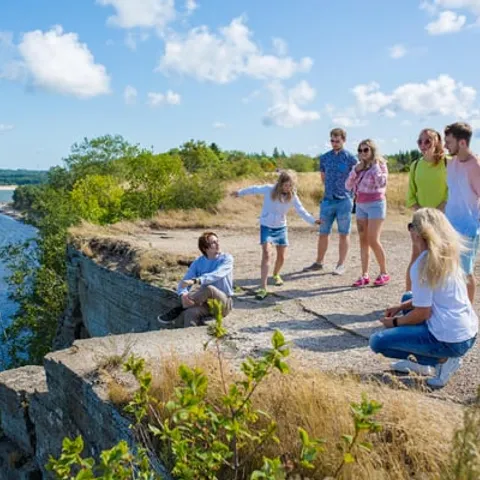
The day tour from Tallinn takes in Suurupi, Keila Waterfall, Paldiski, Pakri Lighthouse and Rummu Quarry, in a group limited to 7.[4]
The White Spoil: What Quarrying Left Behind
Quarrying leaves two things behind: holes and heaps. At Rummu the heaps are the white slopes and ridges around the water, ground-up limestone and waste rock that never made a good block. They are bright in sun, loose underfoot where the surface slides, and slowly being colonised by moss, birch and pine seedlings. Around the lake there are concrete footings, rusted pipes, the stumps of machinery and long low sheds gone quiet.
The pit itself filled after the pumps stopped, following the prison's closure after 1991.[2] The lake reaches a maximum depth of 14 metres,[3] and summer water temperature is 15.0-20.0 °C.[12] Locals usually come to swim here in summer, at an unofficial and unguarded spot.[6]
In winter the same water is put to different use. A ticket to the Rummu skating rink includes access to the Rummu quarry in winter, along with the skating rink, the prison and an audio guide.[11] The quarry gates are open all year round, Monday to Sunday, 10:00 to 20:00.[5] Walk the spoil heaps in sturdy shoes, keep away from the flooded building, and treat the lake as the unguarded water it is.[6]
Quarried Stone versus Cliff Limestone
Limestone is a layered rock, and the layers tell you where it was made: on a warm shallow sea floor, layer on layer of shell, mud and lime, pressed down over a very long time. In a cliff you see those layers edge-on, tilted, cracked and weathered into buttresses and gullies, with the sea undercutting the base. In a quarry the same rock is attacked from the other direction, drilled and split into neat blocks with the bedding running through them.
The two faces give you different things to look at. Cliff limestone is rough, pitted, stained with algae and full of fossils when you get close. Quarry stone is squared and even, showing the grain of the bedding as faint banding where it has been polished. The coast west of Tallinn offers both: the cliff edge at Pakri and Suurupi, and the quarry faces at Rummu.
There is a colour difference too. Fresh quarry stone is pale, almost white when dry, and darkens with rain and city soot. Cliff limestone, seen from the beach below or from the water, goes grey, green and rust where weather and sea work on it. Same rock, two wardrobes.
Quarrying Today: Active Extraction Near Rummu
The Vasalemma limestone is still quarried in the area, and the working pits are a different world from the flooded one: benches of stone, haul roads, cutting sheds, stacks of sawn blocks waiting for a lorry. Sawn stone from this corner of Estonia still goes into building work, restoration and paving. The industry that made the Rummu pit is not a museum piece.
Getting there without a car is possible. FlixBus runs 2 rides each day between Tallinn and Rummu.[9] A private transfer from the Rummu Quarry and Prison site to Tallinn is listed at a total distance of 45 km, with an estimated time of 50 min.[10] The quarry is open all year round, Monday to Sunday, 10:00 to 20:00.[5] If you want to stay overnight, Rummu Caravan Park offers accommodation for motorhomes, caravans and tents.[15]
Divers can join the weekly dives for certified divers run by Rummu Diving & WaterSports, which also organises open water dives for incomplete courses and full OWD courses.[13] Sauna rituals are offered at Paekalda Holiday Center.[16] And if you would rather leave the logistics to someone else, the Tallinn: Rummu Quarry, Coastal Cliffs & Keila Waterfall day tour runs 6 hours in a group limited to 7, from US$144.[4] For anyone doing Tallinn from the UK on a short break, it is the simplest way to see the pit, the prison ruins and the cliffs in one day.
From-prices of day tours from Tallinn
From-prices in US dollars for GetYourGuide day tours from Tallinn.[4][7][8][17]
What a day out from Tallinn costs
Per-person from-prices in US dollars; no child rates are listed.[4][7][8][17]
When to go to Rummu and the coast
Planning the limestone day
Book the day tour
Small groups fill up; the Rummu Quarry, Coastal Cliffs and Keila Waterfall tour takes 6 hours and starts from US$144.[4]
Meet the van in Tallinn
The loop heads west from the city through Suurupi, Keila Waterfall, Paldiski and Pakri Lighthouse before the quarry stop.[4]
Walk the quarry shore
The site is open all year round, Monday to Sunday, 10:00 to 20:00, so you can linger if the schedule allows.[5]
Look into the water
The lake reaches a maximum depth of 14 metres, summer water sits at 15.0-20.0 °C, and the spot is unofficial and unguarded.[3][6][12]
Wear grippy shoes
Spoil heaps and quarry tracks are loose underfoot, and coastal weather turns quickly, so boots and a windproof layer earn their place.
See the flooded quarry and the limestone coast in one day
from US$144Reserve now & pay later